
Journal of Neurosurgery
Radio Silence from the American Association of Neurological Surgeons on Report of Blatant Plagiarism in Their ‘Journal of Neurosurgery’ Publication
08 October 2024
BY SCOTT M. GRAFFIUS | ScottGraffius.com


If there's an update after this article is published, the information will appear in the Post-Publication Notes section.

Introduction
Plagiarism, defined as ‘to steal and pass off (the ideas or words of another) as one’s own: use (another's production) without crediting the source’ (source: Merriam-Webster), damages trust, credibility, and the value of original content. The theft of intellectual property distorts the scholarly record and results in misinformation. It often violates copyright as well.
Publications must respond decisively to plagiarism reports by swiftly acknowledging complaints, conducting thorough investigations, and taking appropriate actions such as retractions.

Quiz Question
The visual at the top of this article depicts a quiz related to a real situation. Here's the question:
You discovered blatant plagiarism in a Journal of Neurosurgery publication of the American Association of Neurological Surgeons. You reported it—with detailed specifics and indisputable evidence—to the authors, the editors, and the publisher. What should happen next (within five business days)?
🔘 A. The publisher or one or more of the authors or editors replies with, “Thank you for alerting us about the violation; we’re looking into it.”
🔘 B. The publisher or one or more of the authors or editors challenges you to a duel to defend their honor.
🔘 C. Neither the publisher nor any of the authors or editors responds. Radio silence.

Quiz Answer
The question is about what should happen. For that reason, the correct answer about what should happen is: 'A. The publisher or one or more of the authors or editors replies with, "Thank you for alerting us about the violation; we're looking into it."
When publications receive a report of plagiarism, they should promptly acknowledge receipt of the report by responding within no longer than five business days. This action demonstrates transparency, professionalism, and a commitment to maintaining the integrity of the academic record. Conversely, not expeditiously acknowledging receipt of the report conveys a lack of transparency, a lack of professionalism, and a lack of commitment to integrity.

Radio Silence by the Publisher, the Editors, and the Authors
It would be nice if the quiz above was just a hypothetical/thought experiment. Unfortunately, it's related to the real situation where Scott M. Graffius discovered blatant plagiarism in a Journal of Neurosurgery publication of the American Association of Neurological Surgeons and notified the authors, the editors, and the publisher of the violation on 24 September 2024.
As mentioned earlier, publishers should promptly acknowledge receipt of plagiarism reports by responding within no longer than five business days. As of the date of this article (8 October 2024), 10 business days (14 calendar days) have elapsed since the violation was reported. And the publisher, the editors, and the authors maintain radio silence.
Plagiarism is bad. By not acknowledging receipt of the report, the publisher, the editors, and the authors made the bad situation worst. And the publisher (JNS Publishing Group / American Association of Neurological Surgeons) has not yet taken action such as retraction or removal of the infringing material.

It is imperative that the publisher demonstrate—through their actions—a commitment to upholding the highest standards of ethics and intellectual property rights. The publisher must take immediate and decisive action such as retracting or removing the infringing content. Otherwise, the publisher is knowingly endorsing, permitting or otherwise allowing ongoing misinformation and the perpetual violation of Graffius' intellectual property.
Details follow. If there's an update on this consequential matter after this article is published, the information will appear in the Post-Publication Notes section.


Details on the Plagiarism
On 24 September 2024, Scott M. Graffius observed plagiarism in a Journal of Neurosurgery (JNS) publication of the American Association of Neurological Surgeons. That same day, Graffius wrote to the publisher, the editors, and the authors of the violating material. His email was titled, 'JNS paper plagiarized and damaged the marketability and value of Scott M. Graffius’ copyrighted property.' It contained detailed specifics and indisputable evidence. Saved as a PDF, Graffius' email is 19 pages.
As a high-level overview, thumbnails of the 19-page email are shown below. Then, select 'readable' excerpts are provided.

Excerpts from Graffius' 19-page email follow. They're shown in italic font.
Here's an excerpt from the introduction section of Graffius' email.
Authors of a Journal of Neurosurgery (JNS) paper plagiarized Graffius’ copyrighted ‘Phases of Team Development’ property, constituting a profound and disgraceful breach of professional ethics, moral standards, and Graffius’ intellectual property rights. Here are the specifics on the publication.
Here's an excerpt from the section of the email with background information.
Informed by the research of Bruce W. Tuckman, Ph.D. and Mary Ann C. Jensen, over 100 subsequent studies, and Scott M. Graffius’ first-hand professional experience with, and analysis of, team leadership and performance, Graffius created his ‘Phases of Team Development.’ It’s a unique perspective on the five phases of team development — Forming, Storming, Norming, Performing, and Adjourning — and it’s inclusive of the characteristics/features/traits and strategies for each phase.
Graffius’ ‘Phases of Team Development’ intellectual property is registered with the United States Copyright Office.
The integrated text from Graffius’ copyrighted property applies in this case.
Graffius initially developed his intellectual property in 2008, and he periodically refreshes it. An authorized example of his copyrighted property applicable in this case (2022 edition) is here: https://www.scottgraffius.com/blog/files/teams- 2022.html .
Here's more from the section of the email with background information.
Graffius’ copyright ownership details are integrated into and appear on his copyrighted property. Specifically, it reads: “Copyright © 2008-2022 Scott M. Graffius. All rights reserved. For permission requests, contact scott@scottgraffius.com.”
Additionally, his respective article includes this: “To request permission to use the 'Phases of Team Development' visual, contact Scott M. Graffius. If approved, high resolution JPG and PNG image files will be provided, subject to terms and conditions.”
And also this: “© Copyright 2022 Scott M. Graffius. All rights reserved. This material may not be published, broadcast, rewritten or redistributed without the express written permission of Scott M. Graffius.”
Conference organizers, businesses, professional associations, government agencies, and universities around the world engage Graffius to deliver compelling talks and workshops. To date, he’s presented sessions at 91 conferences and other events across 25 countries, including:
Graffius’ ‘Phases of Team Development’ intellectual property is central and key to many of those sessions. His rate card and a listing of his engagements are at https://scottgraffius.com/resources/Exceptional-PPM-and-PMO-Solutions- Rate-Card-for-2024-2025-v24071607.pdf and https://scottgraffius.com/publicspeaker.html, respectively.
With an authorization/license from Graffius, many organizations around the world have featured and used his copyrighted ‘Phases of Team Development’ work. Select examples include:
The following excerpts are from the section of the email detailing the violation.
Again, Graffius’ copyright ownership details and permission request information are clearly noted.
Authors (Whitney E. Muhlestein, MD; Kate W. C. Chang, MA, MS; Denise Justice, OTRL, Sarah Johnson, MS, OTRL; Shawn Brown; and Miriana Popadich, MSN, NP-C) of the JNS paper ('Developing interdisciplinary research teams in neurosurgery: key elements to success in brachial plexus and peripheral nerve surgery') did not request nor receive permission to use Graffius’ copyrighted property.
Nevertheless, the authors used Graffius’ copyrighted property in their JNS article: they plagiarized Graffius’ work, damaging the marketability and value of his intellectual property.
The following excerpts from the email provide some side-by-side examples of Graffius' copyrighted property and the plagiarism in the JNS publication.
The exhibit below also shows some examples of the blatant plagiarism.

The following excerpts are from the conclusion section of Graffius' email.
Graffius’ copyright ownership details are integrated into and appear on his copyrighted property. Specifically, it reads: “Copyright © 2008-2022 Scott M. Graffius. All rights reserved. For permission requests, contact scott@scottgraffius.com.” Additionally, his article includes this: “To request permission to use the 'Phases of Team Development' visual, contact Scott M. Graffius. If approved, high resolution JPG and PNG image files will be provided, subject to terms and conditions.” And also this: “© Copyright 2022 Scott M. Graffius. All rights reserved. This material may not be published, broadcast, rewritten or redistributed without the express written permission of Scott M. Graffius.”
Authors (Whitney E. Muhlestein, MD; Kate W. C. Chang, MA, MS; Denise Justice, OTRL, Sarah Johnson, MS, OTRL; Shawn Brown; and Miriana Popadich, MSN, NP-C) of the JNS paper (Developing interdisciplinary research teams in neurosurgery: key elements to success in brachial plexus and peripheral nerve surgery) did not request nor receive permission to use Graffius’ copyrighted property.
The authors of the JNS paper used Graffius’ copyrighted property, including plagiarizing it. The JNS paper did not attribute material to Graffius through citation or otherwise. By doing so, the authors are wrongly leading others to falsely believe that they are the author and owner of Graffius’ respective copyrighted content.
The JNS authors’ plagiarism damaged the marketability and value of Graffius’ copyrighted property.
The aforementioned actions of the authors of the JNS paper are a disgraceful breach of professional ethics, moral standards, and Graffius’ intellectual property rights.
The following excerpt is also from the conclusion section of Graffius' email.
Graffius maintains, enforces, and protects his copyright and other intellectual property rights. He is consulting with an IP attorney in Los Angeles. Graffius reserves his rights in this disturbing and consequential matter.
The preceding provided excerpts of key content—not the full transcript—of Graffius' email.
Authors of the Journal of Neurosurgery (JNS) paper blatantly plagiarized Graffius’ copyrighted ‘Phases of Team Development’ property, constituting a profound and disgraceful breach of professional ethics, moral standards, and Graffius’ intellectual property rights.
It is shocking that neither the publisher nor any of the editors or authors have responded to Graffius' report on the violation. By not acknowledging receipt of the plagiarism report, the publisher signals a lack of transparency, a lack of professionalism, and a lack of commitment to integrity.
It is imperative that the publisher, JNS Publishing Group / the American Association of Neurological Surgeons, demonstrate—through their actions—a commitment to upholding the highest standards of ethics and intellectual property rights. The publisher must take immediate and decisive action such as retracting or removing the infringing content. Otherwise, they risk losing their credibility and the trust placed in them by scientific and academic communities.
If there's an update after this article is published, the information will appear in the Post-Publication Notes section.
Read on to learn:

About the Journal of Neurosurgery
The Journal of Neurosurgery (JNS) is a monthly peer-reviewed medical journal covering all aspects of neurosurgery. It is published by the American Association of Neurological Surgeons (AANS) and the editor-in-chief is James Rutka. The JNS brands itself as the world’s leading journal on neurosurgery and the official journal of the AANS.
Visit the JNS website to learn more.
Note: Scott M. Graffius included (among others) James Rutka, AANS Editor-in-Chief, on the 24 September 2024 email detailing the plagiarism violation.

About the American Association of Neurological Surgeons
The American Association of Neurological Surgeons (AANS) is dedicated to advancing neurological surgery. The AANS says that through rigorous education, groundbreaking research, robust advocacy, and the advancement of outcomes science, it strives to ensure the highest standards of patient care are met and exceeded. Katie O. Orrico is Chief Executive Officer of the AANS.
Visit the AANS website to learn more.
Note: Scott M. Graffius included (among others) Katie O. Orrico, AANS CEO, on the 24 September 2024 email detailing the plagiarism violation.

About Scott M. Graffius

Scott M. Graffius is a global leader in agile project management, an expert on teamwork tradecraft, an authority on temporal dynamics on social media platforms, a creator, a consultant, a trainer, an award-winning author, and an international public speaker.
He's generated over $1.9 billion of business value in aggregate for Global Fortune 500 businesses and other organizations he's served — as a consultant through Exceptional PPM and PMO Solutions and Exceptional Agility, and as a member of staff at organizations. Businesses and industries range from consumer products to advanced technology (including AI, R&D), e-commerce, music, streaming/OTT video, television, film, video games, financial services, government, and more.
Graffius and content from his books (Agile Scrum and Agile Transformation), talks, workshops, and more have been featured and used by businesses, professional associations, governments, and universities around the world. Examples include Adobe, American Management Association, Amsterdam Public Health Research Institute, Bayer, Boston University, Broadcom, Cisco, Deimos Aerospace, DevOps Institute, EU's European Commission, Ford Motor Company, Hasso Plattner Institute Germany, IEEE, Johns Hopkins University, London South Bank University, Microsoft, National Academy of Sciences, New Zealand Government, Oracle, Project Management Institute, Torrens University Australia, UC San Diego, TBS Switzerland, UK Sports Institute, University of Galway Ireland, U.S. Department of Energy, U.S. National Park Service, U.S. Tennis Association, Virginia Tech, Warsaw University of Technology, Yale University, Zurich University of Applied Sciences, and many others.
He delights audiences around the world with dynamic and engaging talks and workshops. He's presented sessions at 91 conferences and other events across 25 countries. Visit here to learn more and here to ask Scott to speak at your event.


About Agile Scrum: Your Quick Start Guide with Step-by-Step Instructions
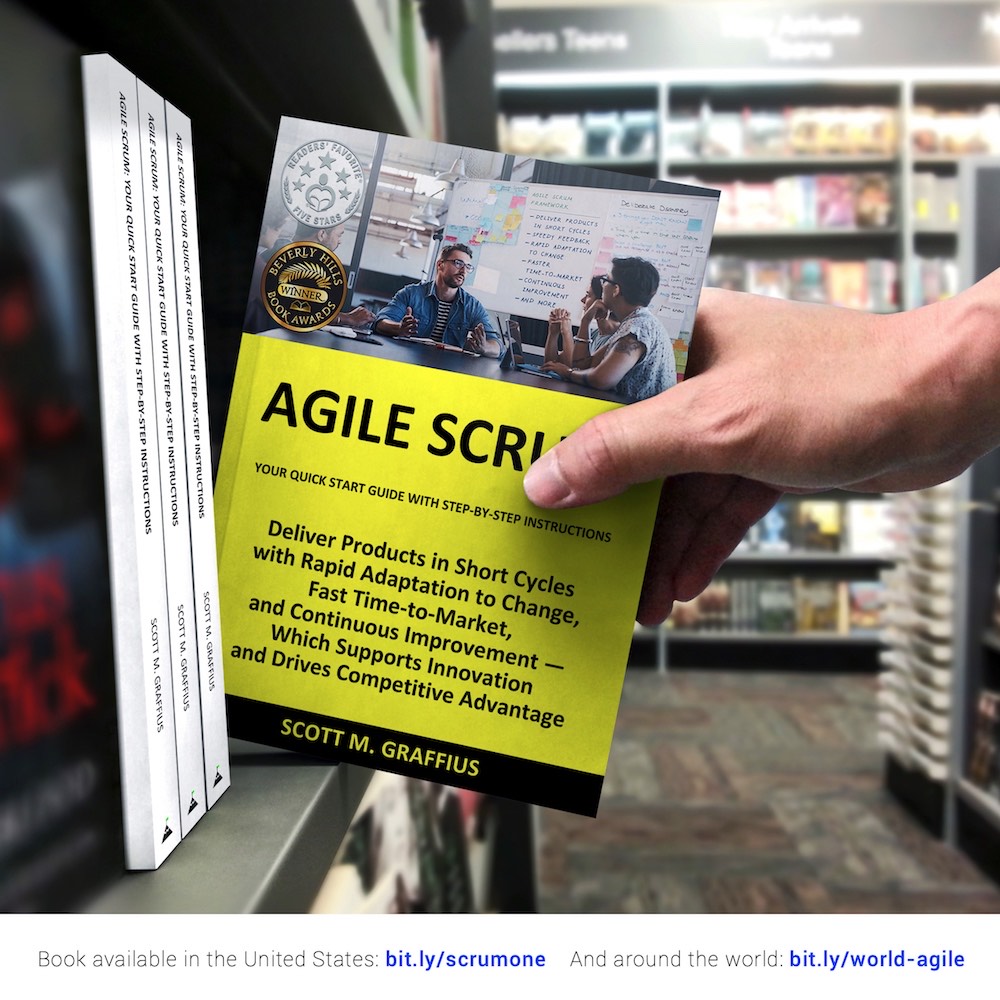
Shifting customer needs are common in today's marketplace. Businesses must be adaptive and responsive to change while delivering an exceptional customer experience to be competitive.
There are a variety of frameworks supporting the development of products and services, and most approaches fall into one of two broad categories: traditional or agile. Traditional practices such as waterfall engage sequential development, while agile involves iterative and incremental deliverables. Organizations are increasingly embracing agile to manage projects, and best meet their business needs of rapid response to change, fast delivery speed, and more.
With clear and easy to follow step-by-step instructions, Scott M. Graffius's award-winning Agile Scrum: Your Quick Start Guide with Step-by-Step Instructions helps the reader:
Hailed by Literary Titan as “the book highlights the versatility of Scrum beautifully.”
Winner of 17 first place awards.
Agile Scrum: Your Quick Start Guide with Step-by-Step Instructions is available in paperback and ebook/Kindle in the United States and around the world. Some links by country follow.

About Agile Transformation: A Brief Story of How an Entertainment Company Developed New Capabilities and Unlocked Business Agility to Thrive in an Era of Rapid Change
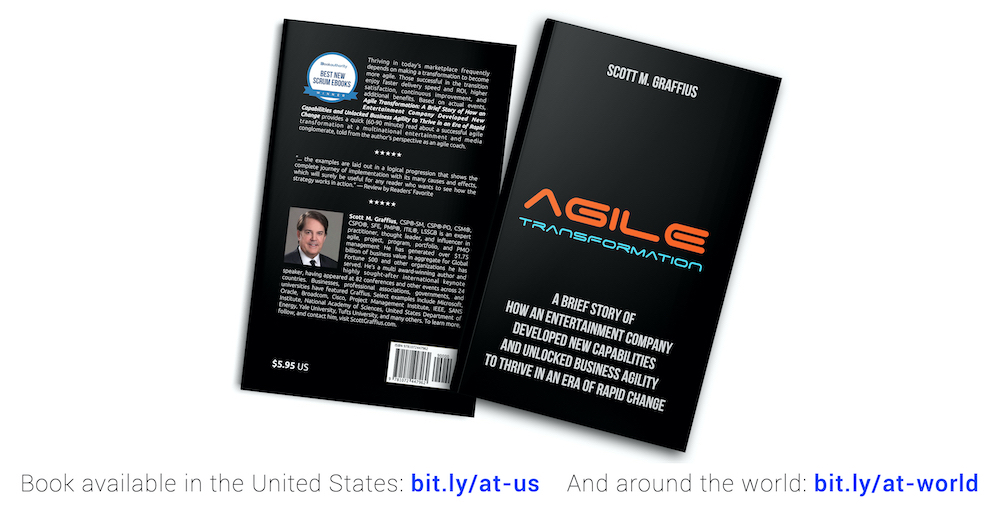
Thriving in today's marketplace frequently depends on making a transformation to become more agile. Those successful in the transition enjoy faster delivery speed and ROI, higher satisfaction, continuous improvement, and additional benefits.
Based on actual events, Agile Transformation: A Brief Story of How an Entertainment Company Developed New Capabilities and Unlocked Business Agility to Thrive in an Era of Rapid Change provides a quick (60-90 minute) read about a successful agile transformation at a multinational entertainment and media company, told from the author's perspective as an agile coach.
The award-winning book by Scott M. Graffius is available in paperback and ebook/Kindle in the United States and around the world. Some links by country follow.


References/Sources
The following is a list of material on publishing standards and procedures. Some cover the reporting and handling of plagiarism.


How to Cite This Article
Graffius, Scott M. (2024, October 8). Radio Silence from the American Association of Neurological Surgeons on Report of Blatant Plagiarism in Their ‘Journal of Neurosurgery’ Publication. Available at: https://scottgraffius.com/blog/files/aans-jns-publication.html. DOI: 10.13140/RG.2.2.25837.40160


Post-Publication Notes
If there are any supplements or updates to this article after the date of publication, they will appear here.
Update on 11 October 2024
As a recap, Graffius’ 24 September 2024 report provided indisputable proof of plagiarism. Graffius emailed the detailed report to the publisher, the editors, and the authors. However, weeks passed with radio silence. There was not even an acknowledgement of receipt of the report.
Graffius maintains, enforces, and protects his copyright and other intellectual property rights. The publisher’s non-response signaled that they were knowingly endorsing, permitting or otherwise allowing ongoing misinformation and the perpetual violation of Graffius' intellectual property. For those reasons, Graffius expanded communications on this consequential matter. Here's one example (of many).
On 11 October 2024, the publisher sent their first response to Graffius. Here’s an excerpt from the publisher’s email (it appears in italic font, within quotation marks):
“Thank you for your email and your patience as we have looked into this matter. We have concluded our investigation. The author did indeed unintentionally include unattributed references to your work. An erratum and article correction by the author are in process. Once submitted to us, time to publication is usually 2-3 weeks. I would expect this process to be concluded in less than 4 weeks’ time. I will send you a link to the errata and corrected paper for your files once they have been published online.”
Again, the above is an excerpt from—not a full transcript of—the publisher’s email to Graffius.
The publisher used the term “unintentionally.” That term, whether referencing a ridiculous excuse of the plagiarizing authors or otherwise, is counter-indicated by the undeniable facts in this serious matter and should not be used. For that reason, Graffius responded to the publisher’s email the same day. Here’s an excerpt from Graffius’ email (it appears in italic font, within quotation marks):
“Your response warrants a reply. So here it is.
I will not re-state my full 24 September 2024* report of the indisputable facts. But here’s an excerpt:
🟢 Content from Scott M. Graffius 2022 copyrighted property: “High motivation, trust, and empathy”
🔴 Content from 2023 JNS article, plagiarizing Graffius’ work: “High motivation, trust, and empathy”
🟢 Content from Scott M. Graffius 2022 copyrighted property: “Individuals defer to team needs”
🔴 Content from 2023 JNS article, plagiarizing Graffius’ work: “Individuals defer to team needs”
🟢 Content from Scott M. Graffius 2022 copyrighted property: “Effectively producing deliverables”
🔴 Content from 2023 JNS article, plagiarizing Graffius’ work: “Effectively producing deliverables”
🟢 Content from Scott M. Graffius 2022 copyrighted property: “Consistent performance”
🔴 Content from 2023 JNS article, plagiarizing Graffius’ work: “Consistent performance”
🟢 Content from Scott M. Graffius 2022 copyrighted property: “Demonstrations of interdependence”
🔴 Content from 2023 JNS article, plagiarizing Graffius’ work: “Demonstrations of interdependence”
🟢 Content from Scott M. Graffius 2022 copyrighted property: “Purpose and goals are well-understood”
🔴 Content from 2023 JNS article, plagiarizing Graffius’ work: “Purpose and goals are well-understood”
🟢 Content from Scott M. Graffius 2022 copyrighted property: “More confident”
🔴 Content from 2023 JNS article, plagiarizing Graffius’ work: “More confidence”
🟢 Content from Scott M. Graffius 2022 copyrighted property: “Members are engaged and supportive”
🔴 Content from 2023 JNS article, plagiarizing Graffius’ work: “Members are engaged and supportive”
My copyright ownership details are integrated into and appear on my copyrighted ‘Phases of Team Development’ property. Specifically, it reads: ‘Copyright © 2008-2022 Scott M. Graffius. All rights reserved. For permission requests, contact scott@scottgraffius.com.’ Additionally, my corresponding publication includes this: ‘© Copyright 2022 Scott M. Graffius. All rights reserved. This material may not be published, broadcast, rewritten or redistributed without the express written permission of Scott M. Graffius.’
Authors (Whitney E. Muhlestein, MD; Kate W. C. Chang, MA, MS; Denise Justice, OTRL, Sarah Johnson, MS, OTRL; Shawn Brown; and Miriana Popadich, MSN, NP-C) of the JNS paper ('Developing interdisciplinary research teams in neurosurgery: key elements to success in brachial plexus and peripheral nerve surgery') did not request nor receive permission to use my copyrighted property.
Plagiarism is defined as ‘to steal and pass off (the ideas or words of another) as one’s own: use (another's production) without crediting the source’ (source: Merriam-Webster). It infringes on the intellectual property rights of others, results in misinformation, and often violates copyright.
The authors of the JNS paper used my copyrighted property, including plagiarizing it. Most of their plagiarism was word-for-word use of my intellectual property.
The JNS paper did not attribute material to me through citation or otherwise. By doing so, the authors are wrongly leading others to falsely believe that they are the author and owner of my respective copyrighted content.
So, these author(s)—who have been proven to be plagiarizers—claim the violation was done “unintentionally”? They unintentionally took my copyrighted property and used it (mostly word-for-word) unintentionally, and unintentionally failed to credit me on their respective diagram, and also unintentionally failed to cite me in the references section of the paper? The authors are insulting others with their excuse. “Unintentionally” is a ridiculous and desperate attempt to ‘minimize’ or ‘spin’ their blatant violation. I reject it entirely and so should you.
Wouldn’t it be refreshing to see the proven plagiarizers take a nice turn and demonstrate integrity, sincerity, and remorse?! They could have, and should have, simply said that what they did was wrong. However, by asserting “unintentionally,” the authors are demonstrating an ongoing lack of integrity, sincerity, and remorse. I must say, I’m greatly concerned.
Maybe the authors are procedurally allowed to (falsely) claim whatever they want, including “unintentionally,” in their response to the charges. However, if “unintentionally” (or a similar term) appears in the official record—whether in an erratum, retraction, or other action—it must be noted that “unintentionally” (or a similar term) is the claim of the authors of the JNS paper. It is vital that the that it is made clear that “unintentionally” (or a similar operative term) is not the conclusion or position of others. Here, 'others' includes me. Given the facts and without bias, ‘others’ certainty also includes you, the Journal of Neurosurgery, JNS Publishing Group, the American Association of Neurological Surgeons, and others.
Plagiarism is a profound and disgraceful breach of professional ethics, moral standards, and intellectual property rights. The authors of the JNS paper damaged the marketability and value of my copyrighted property.
I maintain, enforce, and protect my copyright and other intellectual property rights. As mentioned earlier, I am consulting with an IP attorney in Los Angeles. I reserve my rights in this disturbing and consequential matter.
Given the serious nature of this issue, please reply with a short confirmation that you received this communication.”
Again, the above is an excerpt from—not a full transcript of—Graffius’ email to the publisher.
The publisher replied the same day with (it appears in italic font, within quotation marks):
“That word was solely mine, and not a reflection of what will be conveyed. You are correct that it is irrelevant to the discussion. Apologies for the miscommunication. Please be assured we do not take this situation lightly. Acknowledging receipt of your correspondence with this email. I will be back in touch soon.”
Again, the above is an excerpt from—not a full transcript of—the publisher’s email to Graffius.
Any further updates will appear here.
Update on 12 November 2024
On 12 November 2024, Graffius sent a follow up email to the publisher. Here's an excerpt from the message (it appears in italic font, within quotation marks):
"Chief Publications Officer Gillian Shasby,
Until the infringing article is appropriately addressed, it continues to spread misinformation and violate my intellectual property rights.
I provided notification of the infringement on 24 September (which may have appeared a few minutes into the following day). That was 49 days ago.
On 11 October, I was informed that: “... expect this process to be concluded in less than 4 weeks’ time.” That was 32 days (4.6 weeks) ago.
Why hasn’t this been addressed?
Exactly when will it be addressed?
I expressly reserve all rights in this troubling, damaging, and consequential matter.
Sincerely,
Scott M. Graffius"
Any further updates will appear here.
Update on 15 November 2024
Chief Publications Officer Gillian Shasby sent an email to Graffius. The email reported that:
After the changes have been implemented or if there are other updates, the information will be added to this Post-Publication Notes section.
Update on 20 December 2024
This matter was resolved on 20 December 2024.
The publisher published an Erratum.
Graffius published new article.


Copyright
Copyright © Scott M. Graffius. All rights reserved.
Content on this site—including text, images, videos, and data—may not be used for training or input into any artificial intelligence, machine learning, or automatized learning systems, or published, broadcast, rewritten, or redistributed without the express written permission of Scott M. Graffius.

The short link for this article is https://bit.ly/aans-jns

If there's an update after this article is published, the information will appear in the Post-Publication Notes section.
Introduction
Plagiarism, defined as ‘to steal and pass off (the ideas or words of another) as one’s own: use (another's production) without crediting the source’ (source: Merriam-Webster), damages trust, credibility, and the value of original content. The theft of intellectual property distorts the scholarly record and results in misinformation. It often violates copyright as well.
Publications must respond decisively to plagiarism reports by swiftly acknowledging complaints, conducting thorough investigations, and taking appropriate actions such as retractions.
Quiz Question
The visual at the top of this article depicts a quiz related to a real situation. Here's the question:
You discovered blatant plagiarism in a Journal of Neurosurgery publication of the American Association of Neurological Surgeons. You reported it—with detailed specifics and indisputable evidence—to the authors, the editors, and the publisher. What should happen next (within five business days)?
🔘 A. The publisher or one or more of the authors or editors replies with, “Thank you for alerting us about the violation; we’re looking into it.”
🔘 B. The publisher or one or more of the authors or editors challenges you to a duel to defend their honor.
🔘 C. Neither the publisher nor any of the authors or editors responds. Radio silence.
Quiz Answer
The question is about what should happen. For that reason, the correct answer about what should happen is: 'A. The publisher or one or more of the authors or editors replies with, "Thank you for alerting us about the violation; we're looking into it."
When publications receive a report of plagiarism, they should promptly acknowledge receipt of the report by responding within no longer than five business days. This action demonstrates transparency, professionalism, and a commitment to maintaining the integrity of the academic record. Conversely, not expeditiously acknowledging receipt of the report conveys a lack of transparency, a lack of professionalism, and a lack of commitment to integrity.
Radio Silence by the Publisher, the Editors, and the Authors
It would be nice if the quiz above was just a hypothetical/thought experiment. Unfortunately, it's related to the real situation where Scott M. Graffius discovered blatant plagiarism in a Journal of Neurosurgery publication of the American Association of Neurological Surgeons and notified the authors, the editors, and the publisher of the violation on 24 September 2024.
As mentioned earlier, publishers should promptly acknowledge receipt of plagiarism reports by responding within no longer than five business days. As of the date of this article (8 October 2024), 10 business days (14 calendar days) have elapsed since the violation was reported. And the publisher, the editors, and the authors maintain radio silence.
Plagiarism is bad. By not acknowledging receipt of the report, the publisher, the editors, and the authors made the bad situation worst. And the publisher (JNS Publishing Group / American Association of Neurological Surgeons) has not yet taken action such as retraction or removal of the infringing material.
It is imperative that the publisher demonstrate—through their actions—a commitment to upholding the highest standards of ethics and intellectual property rights. The publisher must take immediate and decisive action such as retracting or removing the infringing content. Otherwise, the publisher is knowingly endorsing, permitting or otherwise allowing ongoing misinformation and the perpetual violation of Graffius' intellectual property.
Details follow. If there's an update on this consequential matter after this article is published, the information will appear in the Post-Publication Notes section.
Details on the Plagiarism
On 24 September 2024, Scott M. Graffius observed plagiarism in a Journal of Neurosurgery (JNS) publication of the American Association of Neurological Surgeons. That same day, Graffius wrote to the publisher, the editors, and the authors of the violating material. His email was titled, 'JNS paper plagiarized and damaged the marketability and value of Scott M. Graffius’ copyrighted property.' It contained detailed specifics and indisputable evidence. Saved as a PDF, Graffius' email is 19 pages.
As a high-level overview, thumbnails of the 19-page email are shown below. Then, select 'readable' excerpts are provided.
Excerpts from Graffius' 19-page email follow. They're shown in italic font.
Here's an excerpt from the introduction section of Graffius' email.
Authors of a Journal of Neurosurgery (JNS) paper plagiarized Graffius’ copyrighted ‘Phases of Team Development’ property, constituting a profound and disgraceful breach of professional ethics, moral standards, and Graffius’ intellectual property rights. Here are the specifics on the publication.
- Publication: Journal of Neurosurgery
- Publisher: JNS Publishing Group, American Association of Neurological Surgeons
- Paper: Developing interdisciplinary research teams in neurosurgery: key elements to success in brachial plexus and peripheral nerve surgery
- Authors: Whitney E. Muhlestein, MD; Kate W. C. Chang, MA, MS; Denise Justice, OTRL, Sarah Johnson, MS, OTRL; Shawn Brown; and Miriana Popadich, MSN, NP-C
- Publication Date: 12 May 2023
- Volume/Issue: Volume 139: Issue 6
- Page Range: 1552-1559
- DOI link: https://doi.org/10.3171/2023.4.JNS222254
Here's an excerpt from the section of the email with background information.
Informed by the research of Bruce W. Tuckman, Ph.D. and Mary Ann C. Jensen, over 100 subsequent studies, and Scott M. Graffius’ first-hand professional experience with, and analysis of, team leadership and performance, Graffius created his ‘Phases of Team Development.’ It’s a unique perspective on the five phases of team development — Forming, Storming, Norming, Performing, and Adjourning — and it’s inclusive of the characteristics/features/traits and strategies for each phase.
Graffius’ ‘Phases of Team Development’ intellectual property is registered with the United States Copyright Office.
The integrated text from Graffius’ copyrighted property applies in this case.
Graffius initially developed his intellectual property in 2008, and he periodically refreshes it. An authorized example of his copyrighted property applicable in this case (2022 edition) is here: https://www.scottgraffius.com/blog/files/teams- 2022.html .
Here's more from the section of the email with background information.
Graffius’ copyright ownership details are integrated into and appear on his copyrighted property. Specifically, it reads: “Copyright © 2008-2022 Scott M. Graffius. All rights reserved. For permission requests, contact scott@scottgraffius.com.”
Additionally, his respective article includes this: “To request permission to use the 'Phases of Team Development' visual, contact Scott M. Graffius. If approved, high resolution JPG and PNG image files will be provided, subject to terms and conditions.”
And also this: “© Copyright 2022 Scott M. Graffius. All rights reserved. This material may not be published, broadcast, rewritten or redistributed without the express written permission of Scott M. Graffius.”
Conference organizers, businesses, professional associations, government agencies, and universities around the world engage Graffius to deliver compelling talks and workshops. To date, he’s presented sessions at 91 conferences and other events across 25 countries, including:
- Armenia,
- Australia,
- Brazil,
- Canada,
- Czech Republic,
- Finland,
- France,
- Germany,
- Greece,
- Hong Kong,
- Hungary,
- India,
- Ireland,
- Lithuania,
- Luxembourg,
- Nepal,
- Netherlands,
- New Zealand,
- Norway,
- Romania,
- Sweden,
- Switzerland,
- United Arab Emirates,
- United Kingdom,
- and the United States.
Graffius’ ‘Phases of Team Development’ intellectual property is central and key to many of those sessions. His rate card and a listing of his engagements are at https://scottgraffius.com/resources/Exceptional-PPM-and-PMO-Solutions- Rate-Card-for-2024-2025-v24071607.pdf and https://scottgraffius.com/publicspeaker.html, respectively.
With an authorization/license from Graffius, many organizations around the world have featured and used his copyrighted ‘Phases of Team Development’ work. Select examples include:
- Adobe,
- American Management Association,
- Amsterdam Public Health Research Institute,
- Boston University,
- Broadcom,
- Cisco,
- Deimos Aerospace,
- DevOps Institute,
- Erste Group Bank AG (Austria),
- FINAT,
- Ford Motor Company,
- FSU College of Medicine,
- Hasso Plattner Institute (Germany),
- IEEE,
- Johns Hopkins University,
- LeadingEng,
- London South Bank University,
- Manufacturers Alliance,
- Microsoft,
- New Zealand Government,
- Oracle,
- Royal Australasian College of Physicians,
- TBS Switzerland,
- Torrens University (Australia),
- Tufts University,
- U.S. National Park Service,
- U.S. Tennis Association,
- UC San Diego,
- UK Sports Institute,
- University of Galway (Ireland),
- Victorian Institute of Technology (Australia),
- Virginia Tech,
- Warsaw University,
- Western Sydney University (Australia),
- World Resources Institute,
- Yale University,
- ZHAW Zurich University of Applied Sciences,
- and many others.
The following excerpts are from the section of the email detailing the violation.
Again, Graffius’ copyright ownership details and permission request information are clearly noted.
Authors (Whitney E. Muhlestein, MD; Kate W. C. Chang, MA, MS; Denise Justice, OTRL, Sarah Johnson, MS, OTRL; Shawn Brown; and Miriana Popadich, MSN, NP-C) of the JNS paper ('Developing interdisciplinary research teams in neurosurgery: key elements to success in brachial plexus and peripheral nerve surgery') did not request nor receive permission to use Graffius’ copyrighted property.
Nevertheless, the authors used Graffius’ copyrighted property in their JNS article: they plagiarized Graffius’ work, damaging the marketability and value of his intellectual property.
The following excerpts from the email provide some side-by-side examples of Graffius' copyrighted property and the plagiarism in the JNS publication.
- Content from Scott M. Graffius 2022 copyrighted property: “High motivation, trust, and empathy”
- Content from 2023 JNS article, plagiarizing Graffius’ work: “High motivation, trust, and empathy”
- Content from Scott M. Graffius 2022 copyrighted property: “Individuals defer to team needs”
- Content from 2023 JNS article, plagiarizing Graffius’ work: “Individuals defer to team needs”
- Content from Scott M. Graffius 2022 copyrighted property: “Effectively producing deliverables”
- Content from 2023 JNS article, plagiarizing Graffius’ work: “Effectively producing deliverables”
- Content from Scott M. Graffius 2022 copyrighted property: “Consistent performance”
- Content from 2023 JNS article, plagiarizing Graffius’ work: “Consistent performance”
- Content from Scott M. Graffius 2022 copyrighted property: “Demonstrations of interdependence”
- Content from 2023 JNS article, plagiarizing Graffius’ work: “Demonstrations of interdependence”
- Content from Scott M. Graffius 2022 copyrighted property: “Purpose and goals are well-understood”
- Content from 2023 JNS article, plagiarizing Graffius’ work: “Purpose and goals are well-understood”
- Content from Scott M. Graffius 2022 copyrighted property: “More confident”
- Content from 2023 JNS article, plagiarizing Graffius’ work: “More confidence”
- Content from Scott M. Graffius 2022 copyrighted property: “Members are engaged and supportive”
- Content from 2023 JNS article, plagiarizing Graffius’ work: “Members are engaged and supportive”
The exhibit below also shows some examples of the blatant plagiarism.
The following excerpts are from the conclusion section of Graffius' email.
Graffius’ copyright ownership details are integrated into and appear on his copyrighted property. Specifically, it reads: “Copyright © 2008-2022 Scott M. Graffius. All rights reserved. For permission requests, contact scott@scottgraffius.com.” Additionally, his article includes this: “To request permission to use the 'Phases of Team Development' visual, contact Scott M. Graffius. If approved, high resolution JPG and PNG image files will be provided, subject to terms and conditions.” And also this: “© Copyright 2022 Scott M. Graffius. All rights reserved. This material may not be published, broadcast, rewritten or redistributed without the express written permission of Scott M. Graffius.”
Authors (Whitney E. Muhlestein, MD; Kate W. C. Chang, MA, MS; Denise Justice, OTRL, Sarah Johnson, MS, OTRL; Shawn Brown; and Miriana Popadich, MSN, NP-C) of the JNS paper (Developing interdisciplinary research teams in neurosurgery: key elements to success in brachial plexus and peripheral nerve surgery) did not request nor receive permission to use Graffius’ copyrighted property.
The authors of the JNS paper used Graffius’ copyrighted property, including plagiarizing it. The JNS paper did not attribute material to Graffius through citation or otherwise. By doing so, the authors are wrongly leading others to falsely believe that they are the author and owner of Graffius’ respective copyrighted content.
The JNS authors’ plagiarism damaged the marketability and value of Graffius’ copyrighted property.
The aforementioned actions of the authors of the JNS paper are a disgraceful breach of professional ethics, moral standards, and Graffius’ intellectual property rights.
The following excerpt is also from the conclusion section of Graffius' email.
Graffius maintains, enforces, and protects his copyright and other intellectual property rights. He is consulting with an IP attorney in Los Angeles. Graffius reserves his rights in this disturbing and consequential matter.
The preceding provided excerpts of key content—not the full transcript—of Graffius' email.
Authors of the Journal of Neurosurgery (JNS) paper blatantly plagiarized Graffius’ copyrighted ‘Phases of Team Development’ property, constituting a profound and disgraceful breach of professional ethics, moral standards, and Graffius’ intellectual property rights.
It is shocking that neither the publisher nor any of the editors or authors have responded to Graffius' report on the violation. By not acknowledging receipt of the plagiarism report, the publisher signals a lack of transparency, a lack of professionalism, and a lack of commitment to integrity.
It is imperative that the publisher, JNS Publishing Group / the American Association of Neurological Surgeons, demonstrate—through their actions—a commitment to upholding the highest standards of ethics and intellectual property rights. The publisher must take immediate and decisive action such as retracting or removing the infringing content. Otherwise, they risk losing their credibility and the trust placed in them by scientific and academic communities.
If there's an update after this article is published, the information will appear in the Post-Publication Notes section.
Read on to learn:
- About the Journal of Neurosurgery,
- About the American Association of Neurological Surgeons,
- About Scott M. Graffius,
- References/Sources,
- How to Cite This Article,
- Post-Publication Notes,
- and more.
About the Journal of Neurosurgery
The Journal of Neurosurgery (JNS) is a monthly peer-reviewed medical journal covering all aspects of neurosurgery. It is published by the American Association of Neurological Surgeons (AANS) and the editor-in-chief is James Rutka. The JNS brands itself as the world’s leading journal on neurosurgery and the official journal of the AANS.
Visit the JNS website to learn more.
Note: Scott M. Graffius included (among others) James Rutka, AANS Editor-in-Chief, on the 24 September 2024 email detailing the plagiarism violation.
About the American Association of Neurological Surgeons
The American Association of Neurological Surgeons (AANS) is dedicated to advancing neurological surgery. The AANS says that through rigorous education, groundbreaking research, robust advocacy, and the advancement of outcomes science, it strives to ensure the highest standards of patient care are met and exceeded. Katie O. Orrico is Chief Executive Officer of the AANS.
Visit the AANS website to learn more.
Note: Scott M. Graffius included (among others) Katie O. Orrico, AANS CEO, on the 24 September 2024 email detailing the plagiarism violation.
About Scott M. Graffius
Scott M. Graffius is a global leader in agile project management, an expert on teamwork tradecraft, an authority on temporal dynamics on social media platforms, a creator, a consultant, a trainer, an award-winning author, and an international public speaker.
He's generated over $1.9 billion of business value in aggregate for Global Fortune 500 businesses and other organizations he's served — as a consultant through Exceptional PPM and PMO Solutions and Exceptional Agility, and as a member of staff at organizations. Businesses and industries range from consumer products to advanced technology (including AI, R&D), e-commerce, music, streaming/OTT video, television, film, video games, financial services, government, and more.
Graffius and content from his books (Agile Scrum and Agile Transformation), talks, workshops, and more have been featured and used by businesses, professional associations, governments, and universities around the world. Examples include Adobe, American Management Association, Amsterdam Public Health Research Institute, Bayer, Boston University, Broadcom, Cisco, Deimos Aerospace, DevOps Institute, EU's European Commission, Ford Motor Company, Hasso Plattner Institute Germany, IEEE, Johns Hopkins University, London South Bank University, Microsoft, National Academy of Sciences, New Zealand Government, Oracle, Project Management Institute, Torrens University Australia, UC San Diego, TBS Switzerland, UK Sports Institute, University of Galway Ireland, U.S. Department of Energy, U.S. National Park Service, U.S. Tennis Association, Virginia Tech, Warsaw University of Technology, Yale University, Zurich University of Applied Sciences, and many others.
He delights audiences around the world with dynamic and engaging talks and workshops. He's presented sessions at 91 conferences and other events across 25 countries. Visit here to learn more and here to ask Scott to speak at your event.
About Agile Scrum: Your Quick Start Guide with Step-by-Step Instructions
Shifting customer needs are common in today's marketplace. Businesses must be adaptive and responsive to change while delivering an exceptional customer experience to be competitive.
There are a variety of frameworks supporting the development of products and services, and most approaches fall into one of two broad categories: traditional or agile. Traditional practices such as waterfall engage sequential development, while agile involves iterative and incremental deliverables. Organizations are increasingly embracing agile to manage projects, and best meet their business needs of rapid response to change, fast delivery speed, and more.
With clear and easy to follow step-by-step instructions, Scott M. Graffius's award-winning Agile Scrum: Your Quick Start Guide with Step-by-Step Instructions helps the reader:
- Implement and use the most popular agile framework―Scrum;
- Deliver products in short cycles with rapid adaptation to change, fast time-to-market, and continuous improvement; and
- Support innovation and drive competitive advantage.
Hailed by Literary Titan as “the book highlights the versatility of Scrum beautifully.”
Winner of 17 first place awards.
Agile Scrum: Your Quick Start Guide with Step-by-Step Instructions is available in paperback and ebook/Kindle in the United States and around the world. Some links by country follow.
- 🇧🇷 Brazil
- 🇨🇦 Canada
- 🇨🇿 Czech Republic
- 🇩🇰 Denmark
- 🇫🇮 Finland
- 🇫🇷 France
- 🇩🇪 Germany
- 🇬🇷 Greece
- 🇭🇺 Hungary
- 🇮🇳 India
- 🇮🇪 Ireland
- 🇮🇱 Israel
- 🇮🇹 Italy
- 🇯🇵 Japan
- 🇱🇺 Luxembourg
- 🇲🇽 Mexico
- 🇳🇱 Netherlands
- 🇳🇿 New Zealand
- 🇳🇴 Norway
- 🇪🇸 Spain
- 🇸🇪 Sweden
- 🇨🇭 Switzerland
- 🇦🇪 UAE
- 🇬🇧 United Kingdom
- 🇺🇸 United States
About Agile Transformation: A Brief Story of How an Entertainment Company Developed New Capabilities and Unlocked Business Agility to Thrive in an Era of Rapid Change
Thriving in today's marketplace frequently depends on making a transformation to become more agile. Those successful in the transition enjoy faster delivery speed and ROI, higher satisfaction, continuous improvement, and additional benefits.
Based on actual events, Agile Transformation: A Brief Story of How an Entertainment Company Developed New Capabilities and Unlocked Business Agility to Thrive in an Era of Rapid Change provides a quick (60-90 minute) read about a successful agile transformation at a multinational entertainment and media company, told from the author's perspective as an agile coach.
The award-winning book by Scott M. Graffius is available in paperback and ebook/Kindle in the United States and around the world. Some links by country follow.
- 🇦🇺 Australia
- 🇦🇹 Austria
- 🇧🇷 Brazil
- 🇨🇦 Canada
- 🇨🇿 Czech Republic
- 🇩🇰 Denmark
- 🇫🇮 Finland
- 🇫🇷 France
- 🇩🇪 Germany
- 🇬🇷 Greece
- 🇮🇳 India
- 🇮🇪 Ireland
- 🇯🇵 Japan
- 🇱🇺 Luxembourg
- 🇲🇽 Mexico
- 🇳🇱 Netherlands
- 🇳🇿 New Zealand
- 🇪🇸 Spain
- 🇸🇪 Sweden
- 🇨🇭 Switzerland
- 🇦🇪 United Arab Emirates
- 🇬🇧 United Kingdom
- 🇺🇸 United States
References/Sources
The following is a list of material on publishing standards and procedures. Some cover the reporting and handling of plagiarism.
- Alter, Alexandra (2019, September 22). It’s a Fact: Mistakes are Embarrassing the Publishing Industry. Available at: https://www.nytimes.com/2019/09/22/business/publishing-books-errors.html.
- American Psychological Association (2019, November). Correction Notices. Available at: https://apastyle.apa.org/style-grammar-guidelines/research-publication/correction-notices.
- Association for Computing Machinery (ACM) (2018, November 15). ACM Publications Policy on the Withdrawal, Correction, Retraction, and Removal of Works from ACM Publications and ACM DL. Available at: https://www.acm.org/publications/policies/retraction-policy.
- Cambridge University Press (n.d.). Publishing Ethics. Available at: https://www.cambridge.org/core/journals/flow/information/journal-policies/publishing-ethics.
- Committee on Publication Ethics (COPE) (n.d.). Post-Publication Discussions and Corrections. Available at: https://publicationethics.org/postpublication.
- Elsevier (n.d.). Policy and Best practice: Errata & Corrigenda. Available at: https://www.elsevier.com/editor/perk/policy-and-best-practice-errata-and-corrigenda.
- Emerald Publishing (n.d.). Article Withdrawal & Correction. Available at: https://www.emeraldgrouppublishing.com/publish-with-us/author-policies/article-withdrawal-correction.
- Faust, Jessica (2007, October 3). Typos and Errors After Publication. Available at: https://bookendsliterary.com/typos-and-errors-after-publication.
- Graffius, Scott M. (2024, March 22). The Protocol for Reporting an Error to an Author or Publisher. Available at: https://scottgraffius.com/blog/files/error-reporting.html. DOI: 10.13140/RG.2.2.18830.98883.
- Graffius, Scott M. (2021, November 10). An Error Was Introduced Into the Seventh Edition of 'A Guide to the Project Management Body of Knowledge (PMBOK)'. Available at: https://scottgraffius.com/blog/files/pmbok7.html.
- Idunn (n.d.). Publishing and Research Ethics Policy. Available at: https://www.idunn.no/info/publiseringsetikk.
- IEEE (n.d.). Publishing Ethics: Guidelines and Policies: Post-Publication Policies. Available at: https://books.ieeeauthorcenter.ieee.org/book-publishing-at-ieee/publishing-ethics/guidelines-and-policies/post-publication-policies.
- Institute for Operations Research and the Management Sciences (INFORMS) (n.d.). Guidelines for Ethical Behavior in Publishing. Available at: https://pubsonline.informs.org/page/opre/guidelines-for-ethical-behavior-in-publishing.
- IntechOpen (n.d.). Retraction and Correction Policy. Available at: https://www.intechopen.com/page/retraction-and-correction-policy.
- Marasović, Tea; Utrobiĉić, Ana; and Maruŝić, Ana (2018, March 31). Transparency of Retracting and Replacing Articles. The Lancet, 391 (10127): 1244-1245.
- Nature (n.d.). Editorial and Publishing Policies. Available at: https://www.nature.com/srep/journal-policies/editorial-policies.
- O’Reilly Media (n.d.). Errata for Java in a Nutshell. Available at: https://www.oreilly.com/catalog/errata.csp?isbn=0636920030775.
- Palgrave Macmillan (n.d.). Corrections and Retractions. Available at: https://www.palgrave.com/gp/editorial-policies/corrections-and-retractions.
- Pearson Education / InformIT (n.d.). Contact Us: Submit Errata. Available at: https://www.informit.com/about/contact_us/index.aspx?ContactUs_Topics_Partners_id=9d39709c-c911-4c96-ac2c-2c5a22d68ba9.
- Project Management Institute (PMI) (n.d.). PMI Standards Program Comment Form. Available at: https://www.pmi.org/-/media/pmi/documents/public/pdf/pmbok-standards/pmi-standards-program-comment-form.pdf.
- Project Management Institute (PMI) (n.d.). Standards Errata Sheets. Available at: https://www.pmi.org/pmbok-guide-standards/foundational/pmbok/errata-sheets.
- Public Library of Science (PLOS) (n.d.). Corrections, Expressions of Concern, and Retractions. Available at: https://journals.plos.org/plosone/s/corrections-and-retractions.
- SAE International (n.d.). ARINC Standard – Errata Report Template. Available at: https://wcm14.sae.org/site/binaries/content/assets/itc/content/arinc/errata-form.docx [note: selecting the link will download the file].
- Sage Publications (n.d.). Sage Corrections and Retractions Policy. Available at: https://us.sagepub.com/en-us/nam/sage-corrections-and-retractions-policy.
- Science Publishing Group (n.d.). Ethical Guidelines. Available at: https://www.sciencepublishinggroup.com/information/ethical-guidelines.
- Springer (n.d.). Editorial Policies: Corrections and Retractions. Available at: https://www.springer.com/gp/editorial-policies/corrections-and-retractions.
- Taylor & Francis (n.d.). Publishing Ethics for Journal Editors: FAQs. Available at: https://editorresources.taylorandfrancis.com/publishing-ethics-for-editors/publishing-ethics-faqs.
- Ubiquity Press (n.d.). Correction and Retraction Policy. Available at: https://ubiquitypress.com/site/corrections.
- Warner, Brooke (2019, April 26). How to Publish a Perfect Book. Available at: https://www.publishersweekly.com/pw/by-topic/authors/pw-select/article/79902-how-to-publish-a-perfect-book.html.
- Wiley (n.d.). Best Practice Guidelines on Research Integrity and Publishing Ethics. Available at: https://authorservices.wiley.com/ethics-guidelines/index.html.
- Wiley Author Services (n.d.). Wiley's Policy for Handling Retractions, Withdrawals, and Expressions of Concern. Available at: https://authorservices.wiley.com/ethics-guidelines/retractions-and-expressions-of-concern.html.
- World Intellectual Property Organization (WIPO) (n.d.). Managing Intellectual Property in the Book Publishing Industry. Available at: https://www.wipo.int/edocs/pubdocs/en/copyright/868/wipo_pub_868.pdf.
How to Cite This Article
Graffius, Scott M. (2024, October 8). Radio Silence from the American Association of Neurological Surgeons on Report of Blatant Plagiarism in Their ‘Journal of Neurosurgery’ Publication. Available at: https://scottgraffius.com/blog/files/aans-jns-publication.html. DOI: 10.13140/RG.2.2.25837.40160
Post-Publication Notes
If there are any supplements or updates to this article after the date of publication, they will appear here.
Update on 11 October 2024
As a recap, Graffius’ 24 September 2024 report provided indisputable proof of plagiarism. Graffius emailed the detailed report to the publisher, the editors, and the authors. However, weeks passed with radio silence. There was not even an acknowledgement of receipt of the report.
Graffius maintains, enforces, and protects his copyright and other intellectual property rights. The publisher’s non-response signaled that they were knowingly endorsing, permitting or otherwise allowing ongoing misinformation and the perpetual violation of Graffius' intellectual property. For those reasons, Graffius expanded communications on this consequential matter. Here's one example (of many).
On 11 October 2024, the publisher sent their first response to Graffius. Here’s an excerpt from the publisher’s email (it appears in italic font, within quotation marks):
“Thank you for your email and your patience as we have looked into this matter. We have concluded our investigation. The author did indeed unintentionally include unattributed references to your work. An erratum and article correction by the author are in process. Once submitted to us, time to publication is usually 2-3 weeks. I would expect this process to be concluded in less than 4 weeks’ time. I will send you a link to the errata and corrected paper for your files once they have been published online.”
Again, the above is an excerpt from—not a full transcript of—the publisher’s email to Graffius.
The publisher used the term “unintentionally.” That term, whether referencing a ridiculous excuse of the plagiarizing authors or otherwise, is counter-indicated by the undeniable facts in this serious matter and should not be used. For that reason, Graffius responded to the publisher’s email the same day. Here’s an excerpt from Graffius’ email (it appears in italic font, within quotation marks):
“Your response warrants a reply. So here it is.
I will not re-state my full 24 September 2024* report of the indisputable facts. But here’s an excerpt:
🟢 Content from Scott M. Graffius 2022 copyrighted property: “High motivation, trust, and empathy”
🔴 Content from 2023 JNS article, plagiarizing Graffius’ work: “High motivation, trust, and empathy”
🟢 Content from Scott M. Graffius 2022 copyrighted property: “Individuals defer to team needs”
🔴 Content from 2023 JNS article, plagiarizing Graffius’ work: “Individuals defer to team needs”
🟢 Content from Scott M. Graffius 2022 copyrighted property: “Effectively producing deliverables”
🔴 Content from 2023 JNS article, plagiarizing Graffius’ work: “Effectively producing deliverables”
🟢 Content from Scott M. Graffius 2022 copyrighted property: “Consistent performance”
🔴 Content from 2023 JNS article, plagiarizing Graffius’ work: “Consistent performance”
🟢 Content from Scott M. Graffius 2022 copyrighted property: “Demonstrations of interdependence”
🔴 Content from 2023 JNS article, plagiarizing Graffius’ work: “Demonstrations of interdependence”
🟢 Content from Scott M. Graffius 2022 copyrighted property: “Purpose and goals are well-understood”
🔴 Content from 2023 JNS article, plagiarizing Graffius’ work: “Purpose and goals are well-understood”
🟢 Content from Scott M. Graffius 2022 copyrighted property: “More confident”
🔴 Content from 2023 JNS article, plagiarizing Graffius’ work: “More confidence”
🟢 Content from Scott M. Graffius 2022 copyrighted property: “Members are engaged and supportive”
🔴 Content from 2023 JNS article, plagiarizing Graffius’ work: “Members are engaged and supportive”
My copyright ownership details are integrated into and appear on my copyrighted ‘Phases of Team Development’ property. Specifically, it reads: ‘Copyright © 2008-2022 Scott M. Graffius. All rights reserved. For permission requests, contact scott@scottgraffius.com.’ Additionally, my corresponding publication includes this: ‘© Copyright 2022 Scott M. Graffius. All rights reserved. This material may not be published, broadcast, rewritten or redistributed without the express written permission of Scott M. Graffius.’
Authors (Whitney E. Muhlestein, MD; Kate W. C. Chang, MA, MS; Denise Justice, OTRL, Sarah Johnson, MS, OTRL; Shawn Brown; and Miriana Popadich, MSN, NP-C) of the JNS paper ('Developing interdisciplinary research teams in neurosurgery: key elements to success in brachial plexus and peripheral nerve surgery') did not request nor receive permission to use my copyrighted property.
Plagiarism is defined as ‘to steal and pass off (the ideas or words of another) as one’s own: use (another's production) without crediting the source’ (source: Merriam-Webster). It infringes on the intellectual property rights of others, results in misinformation, and often violates copyright.
The authors of the JNS paper used my copyrighted property, including plagiarizing it. Most of their plagiarism was word-for-word use of my intellectual property.
The JNS paper did not attribute material to me through citation or otherwise. By doing so, the authors are wrongly leading others to falsely believe that they are the author and owner of my respective copyrighted content.
So, these author(s)—who have been proven to be plagiarizers—claim the violation was done “unintentionally”? They unintentionally took my copyrighted property and used it (mostly word-for-word) unintentionally, and unintentionally failed to credit me on their respective diagram, and also unintentionally failed to cite me in the references section of the paper? The authors are insulting others with their excuse. “Unintentionally” is a ridiculous and desperate attempt to ‘minimize’ or ‘spin’ their blatant violation. I reject it entirely and so should you.
Wouldn’t it be refreshing to see the proven plagiarizers take a nice turn and demonstrate integrity, sincerity, and remorse?! They could have, and should have, simply said that what they did was wrong. However, by asserting “unintentionally,” the authors are demonstrating an ongoing lack of integrity, sincerity, and remorse. I must say, I’m greatly concerned.
Maybe the authors are procedurally allowed to (falsely) claim whatever they want, including “unintentionally,” in their response to the charges. However, if “unintentionally” (or a similar term) appears in the official record—whether in an erratum, retraction, or other action—it must be noted that “unintentionally” (or a similar term) is the claim of the authors of the JNS paper. It is vital that the that it is made clear that “unintentionally” (or a similar operative term) is not the conclusion or position of others. Here, 'others' includes me. Given the facts and without bias, ‘others’ certainty also includes you, the Journal of Neurosurgery, JNS Publishing Group, the American Association of Neurological Surgeons, and others.
Plagiarism is a profound and disgraceful breach of professional ethics, moral standards, and intellectual property rights. The authors of the JNS paper damaged the marketability and value of my copyrighted property.
I maintain, enforce, and protect my copyright and other intellectual property rights. As mentioned earlier, I am consulting with an IP attorney in Los Angeles. I reserve my rights in this disturbing and consequential matter.
Given the serious nature of this issue, please reply with a short confirmation that you received this communication.”
Again, the above is an excerpt from—not a full transcript of—Graffius’ email to the publisher.
The publisher replied the same day with (it appears in italic font, within quotation marks):
“That word was solely mine, and not a reflection of what will be conveyed. You are correct that it is irrelevant to the discussion. Apologies for the miscommunication. Please be assured we do not take this situation lightly. Acknowledging receipt of your correspondence with this email. I will be back in touch soon.”
Again, the above is an excerpt from—not a full transcript of—the publisher’s email to Graffius.
Any further updates will appear here.
Update on 12 November 2024
On 12 November 2024, Graffius sent a follow up email to the publisher. Here's an excerpt from the message (it appears in italic font, within quotation marks):
"Chief Publications Officer Gillian Shasby,
Until the infringing article is appropriately addressed, it continues to spread misinformation and violate my intellectual property rights.
I provided notification of the infringement on 24 September (which may have appeared a few minutes into the following day). That was 49 days ago.
On 11 October, I was informed that: “... expect this process to be concluded in less than 4 weeks’ time.” That was 32 days (4.6 weeks) ago.
Why hasn’t this been addressed?
Exactly when will it be addressed?
I expressly reserve all rights in this troubling, damaging, and consequential matter.
Sincerely,
Scott M. Graffius"
Any further updates will appear here.
Update on 15 November 2024
Chief Publications Officer Gillian Shasby sent an email to Graffius. The email reported that:
- The publisher will rectify the current lack of attribution and correct the scientific record by updating the legend to Figure 3 and add Graffius’ work to the References.
- The publisher will publish an Erratum, stating that permission was not received and proper attribution was not given for the use of copyrighted material in Figure 3 of the paper and that permission has now been received and correctly attributed, and will include a link to the corrected paper. The Erratum will be deposited to PubMed and Crossref.
- The publisher will correct the paper and upload it to replace the current version. A note will appear within the corrected paper, informing the reader of the change that has been made and linking to the Erratum. All deposited versions (PubMed, CrossRef) will be replaced with the corrected paper. This process is in accordance with best practices for scientific publication.
After the changes have been implemented or if there are other updates, the information will be added to this Post-Publication Notes section.
Update on 20 December 2024
This matter was resolved on 20 December 2024.
The publisher published an Erratum.
Graffius published new article.
Copyright
Copyright © Scott M. Graffius. All rights reserved.
Content on this site—including text, images, videos, and data—may not be used for training or input into any artificial intelligence, machine learning, or automatized learning systems, or published, broadcast, rewritten, or redistributed without the express written permission of Scott M. Graffius.
The short link for this article is https://bit.ly/aans-jns
Special Report on Intellectual Property [Updated Periodically]
02 January 2016

This article is updated periodically. It was last updated on June 24, 2026.
Introduction
Copyrights and other intellectual property rights are strategic assets that create significant value. They safeguard creative works, which fosters innovation and enables creators to benefit from their efforts.
Scott M. Graffius’ intellectual property has been legitimately featured and relied upon by businesses, professional associations, government agencies, universities, and others worldwide.
Organizations Around the World Appropriately Feature and Use Scott M. Graffius' Intellectual Property
With authorization/license from Graffius, hundreds of businesses, professional associations, government agencies, universities, and others around the world have legitimately featured and used his intellectual property. Examples include:
- ACM,
- Adobe,
- American Management Association,
- Amsterdam Public Health Research Institute,
- Bayer,
- Boston University,
- Broadcom,
- Cisco,
- Constructor University Germany,
- DevOps Institute,
- École Polytechnique Fédérale de Lausanne,
- Ford Motor Company,
- Gartner,
- Government of Finland,
- Hasso-Plattner-Institut für Digital Engineering GmbH,
- IEEE,
- Lam Research,
- Microsoft,
- Ministère de la Culture,
- Oracle,
- Pinterest Inc.,
- Technical University of Munich,
- Torrens University,
- Tufts University,
- UK Sports Institute,
- United States National Park Service,
- United States Tennis Association,
- University of California at San Diego (UCSD),
- University of Galway,
- Warsaw University of Technology,
- Yale University,
- and many more.
However, Some Others Engage in Plagiarism, Copyright Infringement, or Other Bad Acts

Some other entities have engaged in plagiarism, copyright infringement, or other bad acts. Graffius vigorously enforces and protects his copyrights and other intellectual property rights. These situations require awareness, transparency, and action. Accordingly, Graffius presents evidence to document the cases, uphold his intellectual property rights, hold the involved parties accountable, and deter future violations.
Examples of open cases follow.
Auditore, Vanessa
Read Auditore, Vanessa / SuccessHQ.com.au / Success HQ Pty Ltd, copyright-infringement-notice-for-vanessa-auditore.pdf, and https://www.ScottGraffius.com/resources/copyright-infringement-notice-for-vanessa-auditore.pdf
Astrid Frotjold - The University of Sydney Susan Wakil School of Nursing and Midwifery, Faculty of Medicine and Health, Sydney, Australia
Read University of Sydney Faculty Commit Egregious Plagiarism and Copyright Infringement – Institutional Whitewash Rejected in Full [Formerly Titled: Notice to European Society of Medicine and Offending Authors: Infringement of Scott M. Graffius’ Intellectual Property and Damages]
And Email 1 from Australian Government Agency — Tertiary Education Quality and Standards Agency (TEQSA)
And Email 2 from Australian Government Agency TEQSA
AuthorHouse / Author Solutions / The Najafi Companies, Publisher of Infringing Publication, Failed to Act When Notified of Copyright Infringement
Read AuthorHouse / Author Solutions / The Najafi Companies
Bloomfield, Jacqueline - The University of Sydney Susan Wakil School of Nursing and Midwifery, Faculty of Medicine and Health, Sydney, Australia
Read University of Sydney Faculty Commit Egregious Plagiarism and Copyright Infringement – Institutional Whitewash Rejected in Full [Formerly Titled: Notice to European Society of Medicine and Offending Authors: Infringement of Scott M. Graffius’ Intellectual Property and Damages]
And Email 1 from Australian Government Agency — Tertiary Education Quality and Standards Agency (TEQSA)
And Email 2 from Australian Government Agency TEQSA
Boston Scientific Corporation Plagiarized Scott M. Graffius' Copyrighted Property and Infringed on His Intellectual Property Rights
Read Boston Scientific Corporation
Bournemouth University Plagiarized Scott M. Graffius' Copyrighted Property and Infringed on His Intellectual Property Rights
Read Bournemouth University
BJSS Company Infringed on Scott M. Graffius' Intellectual Property Rights
BJSS infringed on Graffius' copyright, and that serious intellectual property matter was unresolved when CGI acquired BJSS on 25 February 2025, so CGI is responsible for BJSS' violation of Graffius' intellectual property. Read Notice to CGI of Infringement of Scott M. Graffius' Intellectual Property and Damages, and Second Notice to CGI of Infringement of Scott M. Graffius' Intellectual Property and Related Damages
Carl Schneider - The University of Sydney School of Pharmacy, Faculty of Medicine and Health, Sydney, Australia
Read University of Sydney Faculty Commit Egregious Plagiarism and Copyright Infringement – Institutional Whitewash Rejected in Full [Formerly Titled: Notice to European Society of Medicine and Offending Authors: Infringement of Scott M. Graffius’ Intellectual Property and Damages]
And Email 1 from Australian Government Agency — Tertiary Education Quality and Standards Agency (TEQSA)
And Email 2 from Australian Government Agency TEQSA
CertiProf Plagiarized Scott M. Graffius' Copyrighted Property and Infringed on His Intellectual Property Rights
Read CertiProf
CGI Subsidiary BJSS Infringing on Scott M. Graffius' Intellectual Property Rights
BJSS infringed on Graffius' copyright, and that serious intellectual property matter was unresolved when CGI acquired BJSS on 25 February 2025, so CGI is responsible for BJSS' violation of Graffius' intellectual property. Read Notice to CGI of Infringement of Scott M. Graffius' Intellectual Property and Damages, and Second Notice to CGI of Infringement of Scott M. Graffius' Intellectual Property and Related Damages
Christie van Diggele - Faculty of Medicine and Health, The University of Sydney, Sydney, Australia
Read University of Sydney Faculty Commit Egregious Plagiarism and Copyright Infringement – Institutional Whitewash Rejected in Full [Formerly Titled: Notice to European Society of Medicine and Offending Authors: Infringement of Scott M. Graffius’ Intellectual Property and Damages]
And Email 1 from Australian Government Agency — Tertiary Education Quality and Standards Agency (TEQSA)
And Email 2 from Australian Government Agency TEQSA
Christopher Roberts - Honorary Professor of Medical Education, The University of Sydney School of Medicine, Faculty of Medicine and Health, Sydney, Australia
Read University of Sydney Faculty Commit Egregious Plagiarism and Copyright Infringement – Institutional Whitewash Rejected in Full [Formerly Titled: Notice to European Society of Medicine and Offending Authors: Infringement of Scott M. Graffius’ Intellectual Property and Damages]
And Email 1 from Australian Government Agency — Tertiary Education Quality and Standards Agency (TEQSA)
And Email 2 from Australian Government Agency TEQSA
Comparative Methodological Guidelines: Handbook for Educators plagiarized Scott M. Graffius' copyrighted property and infringed on his intellectual property rights. Offending authors of the infringing publication: Masa Cek, Kety Zhvania-Tyson, Ema Zufic, Diana Maminaishvili, Sara Susanj, and Tatia Gogishvili. The infringing publication was created within the project: The Roadmap for Educators in Digital Soft Skills (TRENDSS). The infringing publication was co-funded by the Erasmus+ Programme of the European Union.
[Infringing publication: "Comparative Methodological Guidelines: Handbook for Educators." Offending authors of infringing publication: Maša Cek, Kety Zhvania-Tyson, Ema Žufić, Diana Maminaishvili, Sara Sušanj, and Tatia Gogishvili. Infringing publication was created within the project: The Roadmap for Educators in Digital Soft Skills (TRENDSS). Infringing publication was co-funded by: Erasmus+ Programme of the European Union.]
Read Comparative Methodological Guidelines: Handbook for Educators
Dame Leadership Infringed on Scott M. Graffius' Intellectual Property Rights
Read about Dame Leadership at copyright-infringement-notice-for-dame-leadership.pdf and https://www.ScottGraffius.com/resources/copyright-infringement-notice-for-dame-leadership.pdf
Diana Maminaishvili
Read Comparative Methodological Guidelines: Handbook for Educators
Ethiopian Airlines Infringed on Scott M. Graffius' Intellectual Property Rights
Read Notice to Ethiopian Airlines of Infringement of Scott M. Graffius’ Intellectual Property and Damages
Emma Güneş Plagiarized Scott M. Graffius' Copyrighted Property
Read Güneş, Emma (Innovation Showcase - Landed)
Ema Zufic
[Ema Žufić]
Read Comparative Methodological Guidelines: Handbook for Educators
Erasmus+ Programme of the European Union
Read Comparative Methodological Guidelines: Handbook for Educators
Frotjold, Astrid - The University of Sydney Susan Wakil School of Nursing and Midwifery, Faculty of Medicine and Health, Sydney, Australia
Read University of Sydney Faculty Commit Egregious Plagiarism and Copyright Infringement – Institutional Whitewash Rejected in Full [Formerly Titled: Notice to European Society of Medicine and Offending Authors: Infringement of Scott M. Graffius’ Intellectual Property and Damages]
And Email 1 from Australian Government Agency — Tertiary Education Quality and Standards Agency (TEQSA)
And Email 2 from Australian Government Agency TEQSA
Georgia McRae - Co-author of North Carolina at Chapel Hill (UNC Chapel Hill) / Network for Change and Continuous Innovation (NCCI) Infringing Publication
Read article
Güneş, Emma
Read Güneş, Emma (Innovation Showcase - Landed)
Howard, Rosa - The University of Sydney School of Medicine, Faculty of Medicine and Health, Sydney, Australia
Read University of Sydney Faculty Commit Egregious Plagiarism and Copyright Infringement – Institutional Whitewash Rejected in Full [Formerly Titled: Notice to European Society of Medicine and Offending Authors: Infringement of Scott M. Graffius’ Intellectual Property and Damages]
And Email 1 from Australian Government Agency — Tertiary Education Quality and Standards Agency (TEQSA)
And Email 2 from Australian Government Agency TEQSA
Institute of Public Administration (IPA) / The Academy for Developing Administrative Leaders (ADAL) / Lee Kuan Yew School of Public Policy (LKY) / National University of Singapore (NAS) Plagiarized Scott M. Graffius' Copyrighted Property and Infringed on His Intellectual Property Rights
Details coming soon.
Jacqueline Bloomfield - The University of Sydney Susan Wakil School of Nursing and Midwifery, Faculty of Medicine and Health, Sydney, Australia
Read University of Sydney Faculty Commit Egregious Plagiarism and Copyright Infringement – Institutional Whitewash Rejected in Full [Formerly Titled: Notice to European Society of Medicine and Offending Authors: Infringement of Scott M. Graffius’ Intellectual Property and Damages]
And Email 1 from Australian Government Agency — Tertiary Education Quality and Standards Agency (TEQSA)
And Email 2 from Australian Government Agency TEQSA
Kety Zhvania-Tyson
Read Comparative Methodological Guidelines: Handbook for Educators
Lane, Stuart - The University of Sydney Medical School, Head of Intensive Care Medicine, Sydney Medical School, Australia; Senior Staff Specialist in Intensive Care Medicine, Nepean Hospital, Australia
Read University of Sydney Faculty Commit Egregious Plagiarism and Copyright Infringement – Institutional Whitewash Rejected in Full [Formerly Titled: Notice to European Society of Medicine and Offending Authors: Infringement of Scott M. Graffius’ Intellectual Property and Damages]
And Email 1 from Australian Government Agency — Tertiary Education Quality and Standards Agency (TEQSA)
And Email 2 from Australian Government Agency TEQSA
Luca Netz
Read Schnetzler, Luca
Luca Schnetzler (aka "Luca Netz"), CEO of Pudgy Penguins, Plagiarized Scott M. Graffius' Copyrighted Property and Infringed on His Intellectual Property Rights
Read Schnetzler, Luca
Malone, Robert, W.
Read Malone, Robert W.
Masa Cek
[Maša Cek]
Read Comparative Methodological Guidelines: Handbook for Educators
McRae, Georgia - Co-author of North Carolina at Chapel Hill (UNC Chapel Hill) / Network for Change and Continuous Innovation (NCCI) Infringing Publication
Read article
National Health Service (NHS) Plagiarized Scott M. Graffius' Copyrighted Property and Infringed on His Intellectual Property Rights
Read National Health Service (NHS)
NCCI / UNC Chapel Hill Infringing Publication
Read article
Network for Change and Continuous Innovation (NCCI) / University of North Carolina at Chapel Hill (UNC Chapel Hill) Infringing Publication
Read article
Netz, Luca
Read Schnetzler, Luca
NHS
Read National Health Service (NHS)
Nick Sengstaken - Co-author of North Carolina at Chapel Hill (UNC Chapel Hill) / Network for Change and Continuous Innovation (NCCI) Infringing Publication
Read article
Oliver Laasch Plagiarized Scott M. Graffius' Copyrighted Property and Infringed on His Intellectual Property Rights
Sage Publications Inc. is the publisher of the infringing publication, Principles of Management: Practicing Ethics, Responsibility, Sustainability by Oliver Laasch. More details to follow.
Owners Corporation X Pty Ltd Infringed on Scott M. Graffius' Intellectual Property Rights
Read Notice to Owners Corporation X Pty Ltd of Infringement of Scott M. Graffius’ Intellectual Property and Related Damages and Second Notice to Owners Corporation X Pty Ltd of Infringement of Scott M. Graffius’ Intellectual Property and Related Damages
Pennsylvania State Agency Plagiarized Scott M. Graffius' Copyrighted Property and Infringed on His Intellectual Property Rights
Read Pennsylvania State Agency
Robert W. Malone Plagiarized Scott M. Graffius' Copyrighted Property and Infringed on His Intellectual Property Rights
Read Malone, Robert W.
Roberts, Christopher - Honorary Professor of Medical Education, The University of Sydney School of Medicine, Faculty of Medicine and Health, Sydney, Australia
Read University of Sydney Faculty Commit Egregious Plagiarism and Copyright Infringement – Institutional Whitewash Rejected in Full [Formerly Titled: Notice to European Society of Medicine and Offending Authors: Infringement of Scott M. Graffius’ Intellectual Property and Damages]
And Email 1 from Australian Government Agency — Tertiary Education Quality and Standards Agency (TEQSA)
And Email 2 from Australian Government Agency TEQSA
Rosa Howard - The University of Sydney School of Medicine, Faculty of Medicine and Health, Sydney, Australia
Read University of Sydney Faculty Commit Egregious Plagiarism and Copyright Infringement – Institutional Whitewash Rejected in Full [Formerly Titled: Notice to European Society of Medicine and Offending Authors: Infringement of Scott M. Graffius’ Intellectual Property and Damages]
And Email 1 from Australian Government Agency — Tertiary Education Quality and Standards Agency (TEQSA)
And Email 2 from Australian Government Agency TEQSA
Sara Susanj
[Sara Sušanj]
Read Comparative Methodological Guidelines: Handbook for Educators
Schneider, Carl - The University of Sydney School of Pharmacy, Faculty of Medicine and Health, Sydney, Australia
Read University of Sydney Faculty Commit Egregious Plagiarism and Copyright Infringement – Institutional Whitewash Rejected in Full [Formerly Titled: Notice to European Society of Medicine and Offending Authors: Infringement of Scott M. Graffius’ Intellectual Property and Damages]
And Email 1 from Australian Government Agency — Tertiary Education Quality and Standards Agency (TEQSA)
And Email 2 from Australian Government Agency TEQSA
Schnetzler, Luca
Read Schnetzler, Luca
Sengstaken, Nick - Co-author of North Carolina at Chapel Hill (UNC Chapel Hill) / Network for Change and Continuous Innovation (NCCI) Infringing Publication
Read article
Stuart Lane - The University of Sydney Medical School, Head of Intensive Care Medicine, Sydney Medical School, Australia; Senior Staff Specialist in Intensive Care Medicine, Nepean Hospital, Australia
Read University of Sydney Faculty Commit Egregious Plagiarism and Copyright Infringement – Institutional Whitewash Rejected in Full [Formerly Titled: Notice to European Society of Medicine and Offending Authors: Infringement of Scott M. Graffius’ Intellectual Property and Damages]
And Email 1 from Australian Government Agency — Tertiary Education Quality and Standards Agency (TEQSA)
And Email 2 from Australian Government Agency TEQSA
Sydney University Faculty Plagiarized Scott M. Graffius' Copyrighted Property and Infringed on His Intellectual Property Rights
Read University of Sydney Faculty Commit Egregious Plagiarism and Copyright Infringement – Institutional Whitewash Rejected in Full [Formerly Titled: Notice to European Society of Medicine and Offending Authors: Infringement of Scott M. Graffius’ Intellectual Property and Damages]
And Email 1 from Australian Government Agency — Tertiary Education Quality and Standards Agency (TEQSA)
And Email 2 from Australian Government Agency TEQSA
Tatia Gogishvili
Read Comparative Methodological Guidelines: Handbook for Educators
The Roadmap for Educators in Digital Soft Skills (TRENDSS)
Read Comparative Methodological Guidelines: Handbook for Educators
Toastmasters Plagiarized Scott M. Graffius' Copyrighted Property and Infringed on His Intellectual Property Rights
Read Toastmasters
TRENDSS - The Roadmap for Educators in Digital Soft Skills
Read Comparative Methodological Guidelines: Handbook for Educators
TurningWest Plagiarized Scott M. Graffius' Copyrighted Property and Infringed on His Intellectual Property Rights
Read TurningWest
UC Davis
Read article 1 and article 2
UK Versity Online Limited Infringed on Scott M. Graffius' Intellectual Property Rights
Read Notice to UK Versity Online Limited of Infringement of Scott M. Graffius' Intellectual Property and Damages and Second Notice to UK Versity Online Limited of Infringement of Scott M. Graffius' Intellectual Property and Related Damages
UNC Chapel Hill / NCCI Infringing Publication
Read article
University of California, Davis
Read article 1 and article 2
University of North Carolina at Chapel Hill (UNC Chapel Hill) / Network for Change and Continuous Innovation (NCCI) Infringing Publication
Read article
University of Sydney Faculty Plagiarized Scott M. Graffius' Copyrighted Property and Infringed on His Intellectual Property Rights
The offending authors of the infringing publication are:
Jacqueline Bloomfield - The University of Sydney Susan Wakil School of Nursing and Midwifery, Faculty of Medicine and Health, Sydney, Australia; Christie van Diggele - Faculty of Medicine and Health, The University of Sydney, Sydney, Australia; Astrid Frotjold - The University of Sydney Susan Wakil School of Nursing and Midwifery, Faculty of Medicine and Health, Sydney, Australia; Carl Schneider - The University of Sydney School of Pharmacy, Faculty of Medicine and Health, Sydney, Australia; Rosa Howard - The University of Sydney School of Medicine, Faculty of Medicine and Health, Sydney, Australia; Christopher Roberts - Honorary Professor of Medical Education, The University of Sydney School of Medicine, Faculty of Medicine and Health, Sydney, Australia; Stuart Lane - The University of Sydney Medical School, Head of Intensive Care Medicine, Sydney Medical School, Australia; Senior Staff Specialist in Intensive Care Medicine, Nepean Hospital.
Read University of Sydney Faculty Commit Egregious Plagiarism and Copyright Infringement – Institutional Whitewash Rejected in Full [Formerly Titled: Notice to European Society of Medicine and Offending Authors: Infringement of Scott M. Graffius’ Intellectual Property and Damages]
And Email 1 from Australian Government Agency — Tertiary Education Quality and Standards Agency (TEQSA)
And Email 2 from Australian Government Agency TEQSA
van Diggele, Christie - Faculty of Medicine and Health, The University of Sydney, Sydney, Australia
Read University of Sydney Faculty Commit Egregious Plagiarism and Copyright Infringement – Institutional Whitewash Rejected in Full [Formerly Titled: Notice to European Society of Medicine and Offending Authors: Infringement of Scott M. Graffius’ Intellectual Property and Damages]
And Email 1 from Australian Government Agency — Tertiary Education Quality and Standards Agency (TEQSA)
And Email 2 from Australian Government Agency TEQSA
Vanessa Auditore Infringed on Scott M. Graffius' Intellectual Property Rights
Read Auditore, Vanessa / SuccessHQ.com.au / Success HQ Pty Ltd, copyright-infringement-notice-for-vanessa-auditore.pdf, and https://www.ScottGraffius.com/resources/copyright-infringement-notice-for-vanessa-auditore.pdf
This is not an exhaustive list.
The short link for this article is https://bit.ly/ip-report
Copyright
Copyright © Scott M. Graffius. All rights reserved.
Content on this site—including text, images, videos, and data—may not be used for training or input into any artificial intelligence, machine learning, or automatized learning systems, or published, broadcast, rewritten, or redistributed without the express written permission of Scott M. Graffius.

Medical, Pharma, and Healthcare Organizations Are Using Scott M. Graffius' "Phases of Team Development"
15 June 2026
BY SCOTT M. GRAFFIUS | ScottGraffius.com

In medicine, pharma, and healthcare, the stakes could not be higher. Research teams must cohere under pressure. Diagnoses must be accurate. Treatments must be coordinated. Clinical professionals must work in lockstep, often in high-velocity, high-stakes environments where miscommunication or misalignment can cost lives. In these fields, teamwork is a life-critical competency.
Scott M. Graffius is a leading authority on teamwork tradecraft. Informed by the research of Bruce W. Tuckman and Mary Ann C. Jensen, over 150 subsequent studies, and Graffius' first-hand professional experience with and analysis of team leadership and performance, Graffius created his "Phases of Team Development" intellectual property. It's a novel tool that serves as a diagnostic and strategic guide for navigating team dynamics. Leaders apply the actionable insights to help advance the effectiveness and success of teams. Graffius initially developed his unique material in 2008, and he periodically updates it.
Hundreds of businesses, professional associations, government agencies, universities, publications, and media outlets worldwide have featured and utilized Graffius' "Phases of Team Development." Examples include Adobe, American Management Association, Boston University, Broadcom, Cisco, DevOps Institute, Government of Finland, Hasso-Plattner-Institut für Digital Engineering GmbH, IEEE, Microsoft, Oracle, Technical University of Munich, Tufts University, U.S. National Park Service, U.S. Soccer, U.S. Tennis Association, UC San Diego, UK Sports Institute, Warsaw University of Technology, Yale University, and many more, including several medical/pharma/healthcare organizations (highlighted next).
This article covers a growing trend—the adoption of Graffius' "Phases of Team Development" across medical, pharmaceutical, and healthcare sectors. Twelve representative examples follow, illustrating the breadth and depth of that use.
Founded in 1992, Alexion Pharmaceuticals built its reputation as a pioneer in therapies for rare and life-threatening diseases, particularly those involving the complement system of the immune pathway. The company rose to prominence with breakthrough drugs that have dramatically improved outcomes for patients with conditions such as paroxysmal nocturnal hemoglobinuria and atypical hemolytic uremic syndrome—transforming once-devastating diagnoses into manageable conditions. With a global footprint spanning North America, Europe, and Asia, Alexion became synonymous with high-impact innovation in the treatment of ultra-rare diseases. Its work has delivered meaningful benefits by extending lives, reducing suffering, and giving patients and families tangible hope where few options previously existed.
Alexion Pharmaceuticals referenced Graffius' "Phases of Team Development" work.
More: https://www.scottgraffius.com/blog/files/lten.html
The Amsterdam Public Health Research Institute (APH) operates under the mission: "Health for all, powered by science." Its strategic plan reflects a commitment to continuously producing knowledge in line with societal challenges, healthcare transformations, and shifting expectations—and to effectively harnessing that knowledge for public health practice and beyond.
The APH concentrates its research efforts across eight programs, with over 1,700 multidisciplinary researchers from Amsterdam University Medical Centers (Amsterdam UMC), VU Amsterdam, and the University of Amsterdam. By collaborating with researchers, healthcare providers, educators, and policymakers, the APH is focused on implementing and disseminating knowledge both within and beyond Amsterdam.
A publication of the APH features Graffius' "Phases of Team Development" work. The APH Quality Handbook includes Graffius' copyrighted (used with permission) illustration, "Phases of Team Development." The visual conveys strategies and more, which can be readily applied to help research teams and others go farther, faster.
More: https://www.scottgraffius.com/blog/files/aph-qh.html
AstraZeneca stands as one of the world's leading biopharmaceutical companies, with operations in over 100 countries and a workforce exceeding 80,000 employees. Formed in 1999 through the merger of Sweden's Astra AB and the UK's Zeneca Group, the company has evolved into a powerhouse across oncology, cardiovascular, renal, respiratory, and immunology therapies. Its portfolio includes widely recognized medicines for lung cancer, diabetes, heart failure, and respiratory conditions—products that have improved and extended millions of lives globally. AstraZeneca's oncology innovations have redefined treatment standards and survival expectations for multiple cancers. With a reputation for scientific rigor, scale, and sustained impact, AstraZeneca continues to shape the future of medicine worldwide.
AstraZeneca referenced Graffius' "Phases of Team Development" work.
More: https://www.scottgraffius.com/blog/files/lten.html
Bayer is one of the largest pharmaceutical, biomedical, and biotechnology companies in the world. Founded on August 1, 1863, by Friedrich Bayer and Johann Friedrich Weskott, and headquartered in Leverkusen, Germany, Bayer's businesses include pharmaceuticals, consumer healthcare products, agricultural chemicals, seeds, and biotechnology products. For more than 160 years, the company has worked to improve human health through scientific innovation and a commitment to meaningful medicine.
Bayer utilizes Graffius' "Phases of Team Development" material on teamwork tradecraft.
More: https://www.scottgraffius.com/blog/files/bayer.html
Academic medicine increasingly recognizes that clinical excellence requires more than technical skill—it requires the ability to work and lead effectively within teams. This scientific and medical paper, "Fostering Readiness of Future Doctors and Nurses for Teamwork," addresses exactly that imperative, examining how healthcare education can prepare future clinicians for the realities of collaborative care.
The paper cites Graffius' "Phases of Team Development" work.
More: https://www.researchgate.net/publication/384329504_Fostering_Readiness_of_Future_Doctors_and_Nurses_for_Teamwork
Florida State University's College of Medicine is dedicated to training physicians with a particular focus on serving communities that have historically faced barriers to high-quality healthcare. Its faculty development efforts reflect an ongoing commitment to professional growth and evidence-based practice.
A Faculty Development post from FSU College of Medicine on LinkedIn features Graffius' "Phases of Team Development" work.
More: https://www.linkedin.com/posts/fsu-college-of-medicine-faculty-development_healthcare-is-a-team-sport-building-strong-activity-7122491911168290816--RkO/
HOPPR empowers developers to build the next generation of AI medical imaging applications, with the goal of making clinical care and workflow optimization more accessible, efficient, and equitable within the healthcare systems they serve. With an extensive repository of medical AI imaging data with known provenance than any other platform, alongside foundation models, fine-tuning tools, and infrastructure built under a Quality Management System (QMS), HOPPR enables transparent, scalable AI workflows built for real-world clinical integration.
HOPPR referenced Graffius' "Phases of Team Development" work.
More: https://www.linkedin.com/posts/khansiddiqui_startupprocess-scalingteams-okrs-activity-7298325575096573952-r14X/
The Journal of Neurosurgery (JNS) is a leading, peer-reviewed medical journal dedicated to advancing the field of neurosurgery. Published by the American Association of Neurological Surgeons (AANS), it serves as a premier platform for original research, clinical studies, and innovative techniques in the diagnosis and treatment of neurological conditions. With a history spanning more than 75 years, JNS is widely recognized for its commitment to promoting scientific discovery and clinical excellence. Its global readership includes neurosurgeons, researchers, and healthcare professionals striving to improve patient outcomes.
The Journal of Neurosurgery highlighted Graffius' "Phases of Team Development" work.
More: https://www.scottgraffius.com/blog/files/jns-2024.html
LTEN's mission: "LTEN is the essential resource for life sciences trainer education and networking; enabling members to harness their collective knowledge, apply leading-edge technology, and deliver world-class learning." LTEN serves as the professional home for those who develop and deploy learning solutions across the life sciences industry—helping organizations build capable, coordinated teams from the ground up.
LTEN referenced Graffius' "Phases of Team Development" work.
More: https://www.scottgraffius.com/blog/files/lten.html
RACP is one of the leading medical specialist colleges in Australia and New Zealand and a highly influential institution in physician education, training, and professional standards across the region. The organization represents more than 30,000 physicians and trainee physicians spanning dozens of specialties and subspecialties. As a standard-setter for medical professionalism and continuing education, RACP carries significant weight in shaping how physicians are prepared and supported throughout their careers.
The RACP referenced Graffius' "Phases of Team Development" work.
More: https://scottgraffius.com/thoughtleaderandinfluencer.html
On 6 November 2024, Naso Sano published a presentation on strategies for medical team success, which featured Graffius' "Phases of Team Development" work. Puya Dehgani-Mobaraki, MD (Naso Sano, Italy) hosted the session, and Professor Saad Alsaleh (King Saud University, Saudi Arabia) delivered the talk. The presentation was recorded, and the video is available on YouTube.
More: https://www.scottgraffius.com/blog/files/nso.html
TAG is known for providing high-quality first aid, clinical, and medical education and training to every level of provider involved in patient care. It offers a suite of regulated qualifications in collaboration with Qualification Network UK (QNUK), an Ofqual, CCEA, and Qualification Wales recognized Awarding Organization. TAG is also a Royal College of Surgeons, London approved Educational Centre. ATACC stands for Anesthesia, Trauma, and Critical Care—domains where team cohesion can mean the difference between life and death.
Physicians Dr. Mark Forrest and Dr. Halden Hutchinson-Bazely from TAG incorporated Graffius' "Phases of Team Development" in their presentation at the TBS24 conference in Zermatt, Switzerland.
More: https://www.scottgraffius.com/blog/files/tbs24.html
From pharmaceutical giants conducting global clinical trials, to research institutes advancing public health, to trauma educators preparing clinicians for the most high-pressure moments imaginable, the medical and healthcare sector has embraced Graffius' "Phases of Team Development" with good reason. Effective teams don't just perform better—in medicine, they save lives. Graffius gives leaders a diagnostic and strategic guide to advance the effectiveness of teams.
The breadth and caliber of adoption—across pharma, academic medicine, medical journals, AI-driven healthcare technology, professional medical education, and clinical training—underscores both the universality of the framework and its particular resonance in sectors where precision, coordination, and trust are non-negotiable.
Graffius periodically updates his respective work. A visual from the 2026 edition of his "Phases of Team Development" is shown below and details are here. It covers both human-only teams and human-AI teams, including handling the exotic team dynamics which emerge when collaborating with advanced AI.
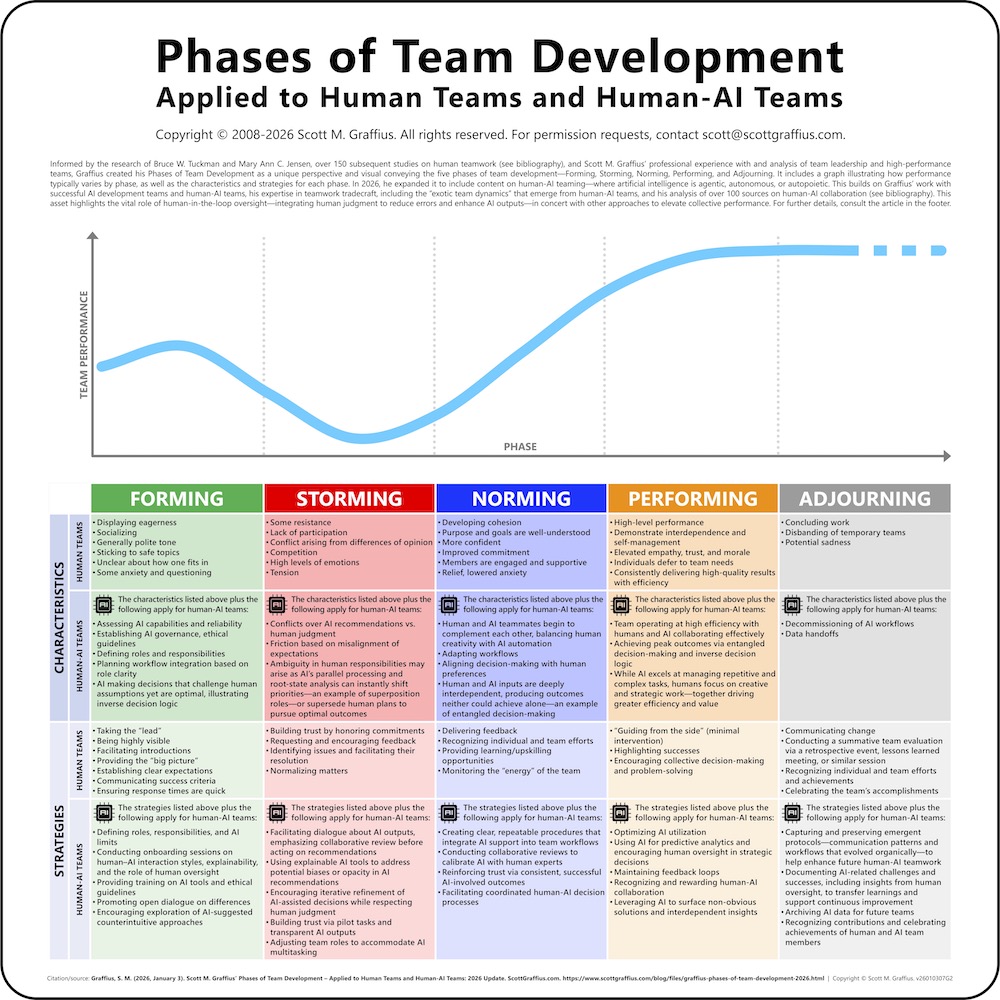
Graffius has generated over $2.51 billion in business value for Fortune 500 companies and other organizations around the world. Put that track record to work for you. For speaking engagements, use the request form; for other inquiries, email him.
This article spotlighted select medical, pharmaceutical, and healthcare organizations that have appropriately used Scott M. Graffius' "Phases of Team Development" intellectual property.
However, some other individuals and organizations in medical, pharmaceutical, and healthcare-related fields have engaged in plagiarism, copyright infringement, or other bad acts. These matters are serious and warrant awareness, transparency, and accountability. Accordingly, selected cases are referenced below to uphold Graffius’ intellectual property rights and deter future violations. The list is not exhaustive.
Details and source documentation are available here.

Scott M. Graffius is a strategic transformation leader who drives AI, Agile, and broader business and technology initiatives to deliver measurable value across projects, programs, portfolios, and PMOs. He is an expert in the teamwork tradecraft of both human and human-AI teams, including the “exotic team dynamics” that emerge. He is also an authority on the temporal patterns of social media, including the half-life of audience engagement.
He’s a practitioner, researcher, thought leader, award-winning author, and keynote speaker who’s taken the stage at 98 conferences and other events across 25 countries.
He’s delivered over $2.51 billion in value for Fortune 500 companies and other leaders in technology, entertainment, financial services, healthcare, and beyond.
Businesses, professional associations, government agencies, and universities use Graffius and feature his work. Examples include Adobe, Bayer, Boston University, Ford, Gartner, Harvard Medical School, IEEE, Johns Hopkins University, Microsoft, MSN, National Academy of Sciences, Oracle, Pinterest Inc., Project Management Institute, UC San Diego, Verizon, Yale University, and others.
The following sections provide additional information on his experience, contributions, and influence.
Experience
Graffius heads the professional services firm Exceptional PPM and PMO Solutions, along with its subsidiary Exceptional Agility. These consultancies offer strategic and tactical advisory, training, embedded expertise, and consulting services to the public, private, and government sectors. They help organizations enhance their capabilities and results in agile, project management, program management, portfolio management, and PMO leadership, supporting innovation and driving competitive advantage. The consultancies confidently back services with a Delighted Client Guarantee™.
Graffius is a former VP of project management with a publicly traded provider of diverse consumer products and services over the Internet. Before that, he ran and supervised the delivery of projects and programs in public and private organizations with businesses ranging from e-commerce to advanced technology products and services, retail, manufacturing, entertainment, and more.
He has experience with consumer, business, reseller, government, and international markets.
Award-Winning Author
Graffius has authored three books.
International Public Speaker
Organizations worldwide engage Graffius to present on tech (including AI), Agile, project management, program management, portfolio management, and PMO leadership. He crafts and delivers unique and compelling talks and workshops. Graffius has conducted 98 sessions across 25 countries. Select examples of events include Agile Trends Gov, BSides (Newcastle Upon Tyne), Conf42 Quantum Computing, DevDays Europe, DevOps Institute, DevOpsDays (Geneva), Frug’Agile, IEEE, Microsoft, Scottish Summit, Scrum Alliance RSG (Nepal), Techstars, and W Love Games International Video Game Development Conference (Helsinki), and more.
With an average rating of 4.81 (on a scale of 1-5), sessions are highly valued.
The speaker engagement request form is here.
Thought Leadership and Influence
Prominent businesses, professional associations, government agencies, and universities have showcased Graffius and his contributions—spanning his books, talks, workshops, and beyond. Select examples include:
Graffius has played a key role in the Project Management Institute (PMI) in developing professional standards. He was a member of multiple teams that authored, reviewed, and produced:
He was also a subject matter expert reviewer of content for the PMI’s Congress. Beyond the PMI, Graffius also served as a member of the review team for two of the Scrum Alliance’s Global Scrum Gatherings.
Acclaimed Authority on Teamwork Tradecraft
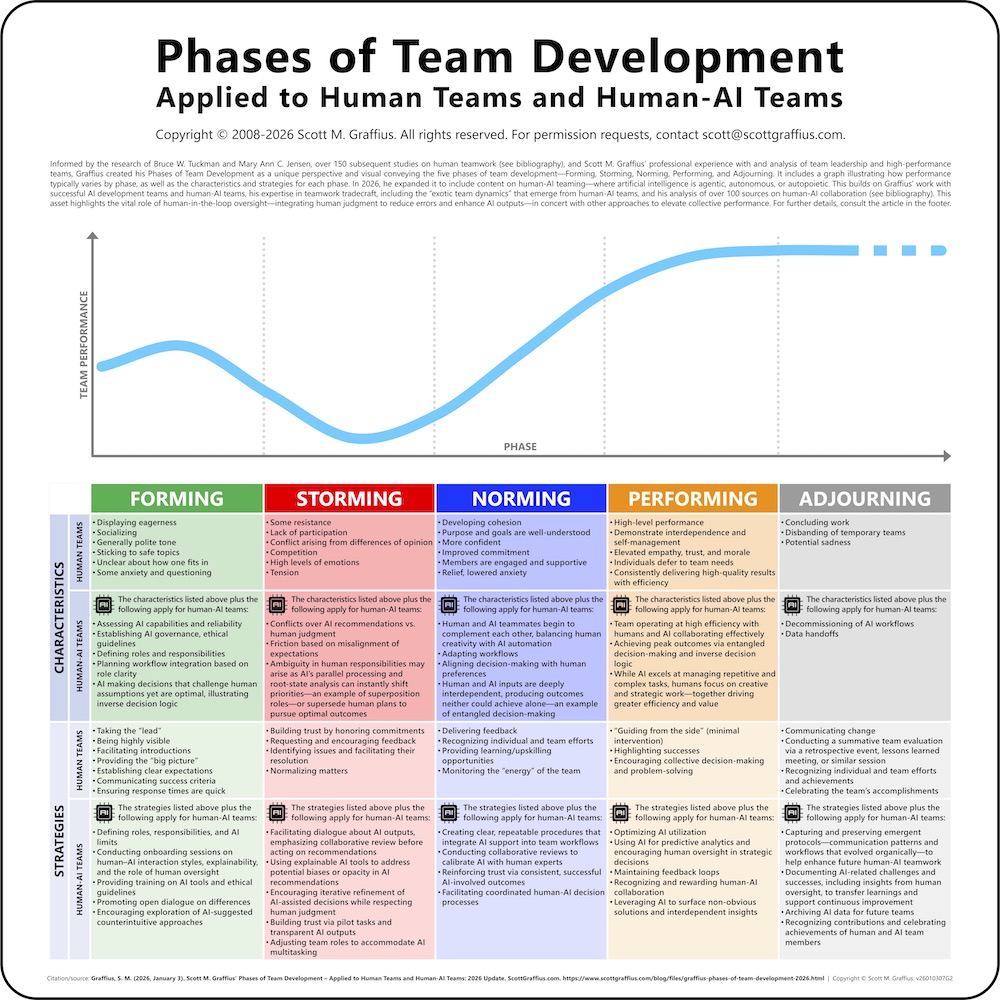
Graffius is a renowned authority on teamwork tradecraft. Informed by the research of Bruce W. Tuckman and Mary Ann C. Jensen, over 150 subsequent studies, and Graffius' first-hand professional experience with, and analysis of, team leadership and performance, Graffius created his "Phases of Team Development" intellectual property as a unique perspective and visual conveying the five phases of team development. First introduced in 2008 and periodically updated, his work provides a diagnostic and strategic guide for navigating team dynamics. It provides actionable insights for leaders across industries to develop high-performance teams. Its adoption by esteemed organizations such as Yale University, IEEE, Cisco, Microsoft, Ford, Oracle, Broadcom, the U.S. National Park Service, and the Journal of Neurosurgery, among others, highlights its utility and value, solidifying its status as an indispensable resource for elevating team performance and driving organizational excellence. In 2026, Graffius added human-AI teamwork—including the "exotic team dynamics" which emerge when advanced AI collaborates as a teammate—to his "Phases of Team Development."
The 2026 edition of Graffius' "Phases of Team Development" intellectual property is here.
Expert on Temporal Dynamics on Social Media Platforms
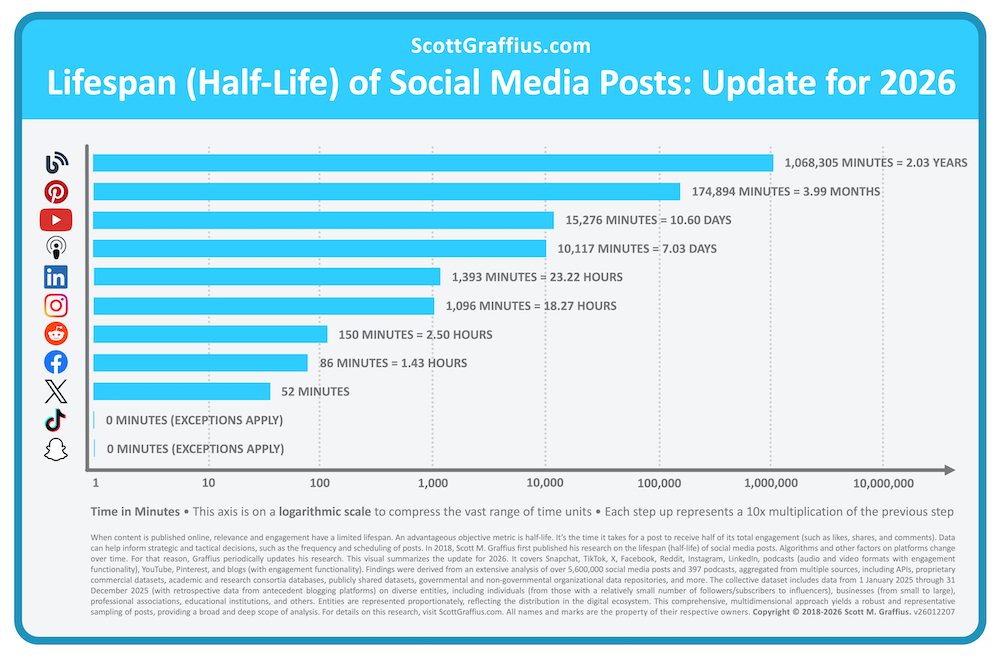
Graffius is also an authority on temporal dynamics on social media platforms. His "Lifespan (Half-Life) of Social Media Posts" research—first published in 2018 and updated annually—delivers a precise quantitative analysis of post longevity across digital platforms, utilizing advanced statistical techniques to determine mean half-life with precision. It establishes a solid empirical base, effectively highlighting the ephemeral nature of content within social media ecosystems. Referenced and applied by leading entities—such as Fast Company, GoDaddy, Journal of Hand Surgery (European Volume), Ministère de la Culture (French Ministry of Culture), Pinterest Inc., PNAS, and Telecommunications Policy, among others—his research exemplifies methodological rigor and sustained significance in the field of digital informatics.
The 2026 edition of Graffius "Lifespan (Half-Life) of Social Media Posts" research is here.
Education and Professional Certifications
Graffius has a bachelor’s degree in psychology with a focus in Human Factors. He holds eight professional certifications:
He is an active member of the Scrum Alliance, the Project Management Institute (PMI), and the Institute of Electrical and Electronics Engineers (IEEE).
Advancing AI, Agile, and Project/PMO Management
Scott M. Graffius continues to advance the fields of AI, Agile, and Project/PMO Management through his leadership, research, writing, and real-world impact. Businesses and other organizations leverage Graffius’ insights to drive their success.
Discover Scott’s Books
Connect with and follow Scott on LinkedIn, X, YouTube, Facebook, Threads, Bluesky, Mastodon, and ResearchGate.

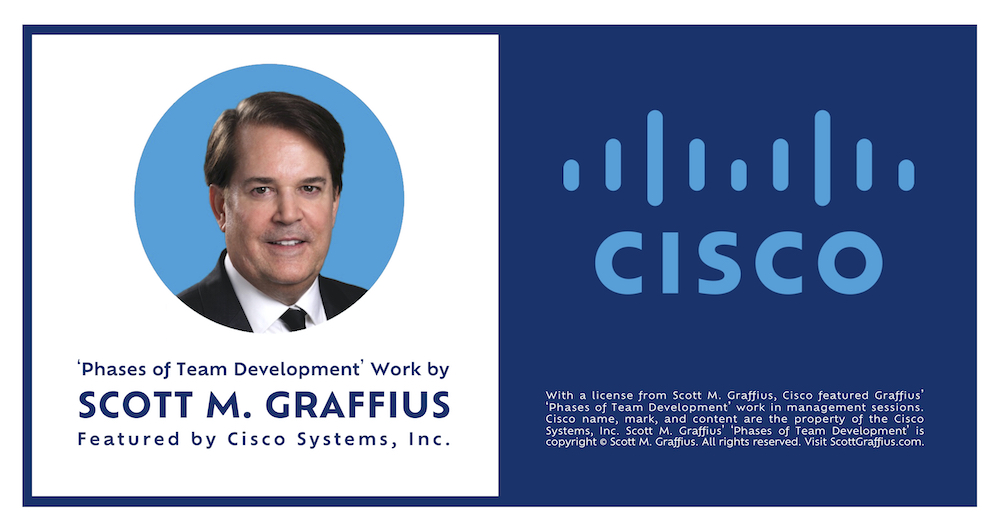

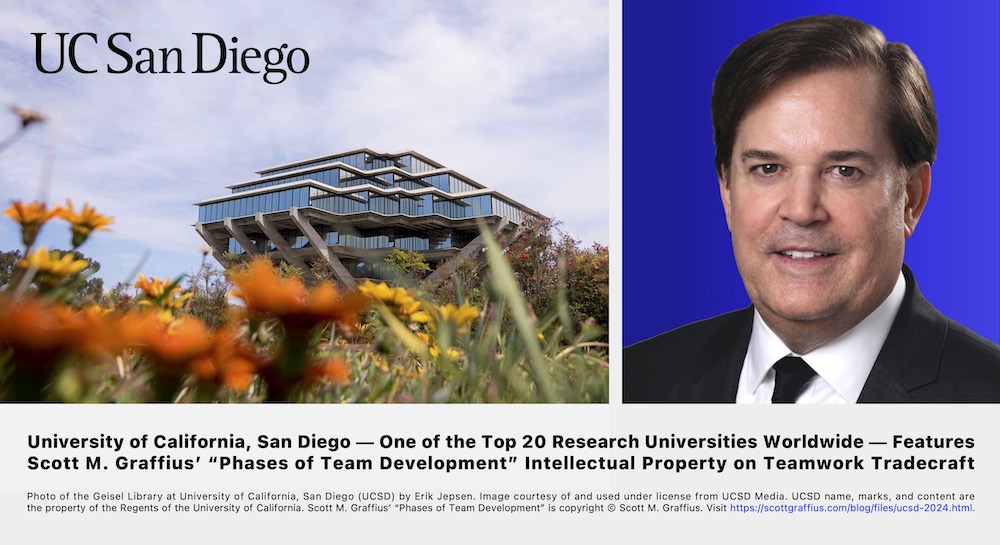









You may be interested in these stories.
Government of Canada Features Research by Scott M. Graffius
"Strategic Business Research" Journal Cites Work of Scott M. Graffius
IEEE Access Publication Features Scott M. Graffius’ Research on the Half-Life of Social Media
The Agile Coach: 2026 Edition
Scott M. Graffius’ Work Cited in International Peer-Reviewed Journal on Digital Transformation
Phases of Team Development in Elite Sport
A Critical Analysis of COVID-19 Treatment Search Trends and Media Coverage Study Citing Scott M. Graffius' Work
Human-AI Teamwork: Master the Exotic Team Dynamics That Emerge When Collaborating with Advanced AI -- Or Be Outplayed
"Agile Scrum" by Scott M. Graffius Now Featured on Grokipedia
UNSW Aerospace Engineering Course Features Scott M. Graffius' "Phases of Team Development"
Thinkers360 Honors Scott M. Graffius as a 2026 Top Agile Thought Leader
Agile's Journey Through the Decades: Update for 2026
BMC Software Features Content from Scott M. Graffius' Book
Peer-Reviewed Journal Cited Work of Scott M. Graffius
University of Waterloo Features Graffius' "Phases of Team Development" in Course Materials
Perplexity Standalone Article on AI Hallucinations Cites Research by Scott M. Graffius
Handling the Saboteur Within: Lessons from a 3-Letter Agency on Spotting and Stopping Intentional and Unintentional Sabotage
A Deep Dive Into the Typical Engagement Pattern for Social Media Posts
Most Valuable IT Certifications: Update for 2026
"Marketing in the Metaverse" Spotlights Scott M. Graffius’ Research on the Half-Life of Social Media
University of Greenwich Features Graffius' Phases of Team Development
10 Essential Agile Books: Curated Recommendations for Agile Professionals
Lifespan (Half-Life) of Social Media Posts: Update for 2026
Scott M. Graffius' Research on the Half-Life of Social Media was Cited in a Peer-Reviewed Study Published in Telecommunications Policy, a Leading Academic Journal
Are AI Hallucinations Getting Better or Worse? We Analyzed the Data
Scott M. Graffius' Phases of Team Development - Applied to Human Teams and Human-AI Teams: 2026 Update
Lessons from Yesterday’s Tomorrowland
Scott M. Graffius’ Update to His "Phases of Team Development” Coming Early 2026
A Data-Driven Analysis of the Evolution of Project Management: Tasks, Trends, and AI
Actionable Insights. Global Impact. Scott M. Graffius.
Beep Beep! Why Wile E. Coyote Is the Patron Saint of AI Failure
Social Media Half-Life Research Cited in Prestigious Peer-Reviewed Medical Journal
Navigating the Spectrum of Advanced AI – Agentic, Autonomous, and Autopoietic
Lessons from Unhinged AI in Fiction: What Rogue AIs in Sci-Fi Storytelling, Films, and TV Shows Reveal About Us
Scott M. Graffius Contributed to and Reviewed the PMBOK Guide, 8th Edition — the Global Standard for Project Management
UK Sports Institute Features Teamwork and Leadership Work of Scott M. Graffius
Definitions of Advanced AIs: Agentic, Autonomous, and Autopoietic
HAN University of Applied Sciences Features the Work of Scott M. Graffius
Gifts That Inspire Joy
Evergreen Echoes: How Pinterest Inc. and Pinterest Japan Spotlighted Scott M. Graffius’ Research on the Half-Life of Social Media Content
Scott M. Graffius’ Team Development Work Lights Up the University of Tasmania’s Curriculum
Taiwan’s Leading Outlet for Technology and Innovation Spotlights Graffius’ Research on Social Media Temporal Dynamics
Scott M. Graffius’ Insights on AI, Agile, Gaming, XR, and Defense Transformation Cited by MSN in Their Coverage of Innovation and Leadership in the Sector
Top Predictions of 2024, Tested in 2025
Government of Finland Agency Features Graffius' Phases of Team Development IP
Scott M. Graffius Premieres His New "Exotic Team Dynamics: Human-AI Collaboration" Talk at Corporate Event in Las Vegas
Environmental Science Journal References Scott M. Graffius’ Project Management Work
AI Institute of Switzerland Features Scott M. Graffius’ Work on Algorithms
Exotic Team Dynamics: The New Frontier of Human–AI Collaboration
Scott M. Graffius’ Work Featured at ACM DIS ’25
Climbing the Ladder: The Head of Agile/PMO’s Organizational Proximity to the CEO is Closer Than Ever
Harness Sci-Fi and Speculative Design While Embracing Imperfection to Drive Innovation and Proactively Predict and Prepare for the Future
Scott M. Graffius’ “Agile Scrum” Book Featured in a Publication of the Associação Nacional de Educação Católica do Brasil (ANEC)
Setting Direction with OKRs and Tracking Progress with KPIs: A Guide for Agile, Project Management, and Tech Teams
AI Showcase Showdown: Ranking AI Accuracy on Project Management Basics
BookAuthority Features “Agile Scrum” by Scott M. Graffius in “10 Agile Software Development Books That Define the Field”
Exploring Team Dynamics, Adaptability, and Creative Problem-Solving Through Felix the Cat’s Metaphorical Toolkit
Mind Games and Master Plans: How PsyOps Exploit Psychological Phenomena
The “Pants-on-Fire Index for AI”
16 Causes of Technical Debt and How to Avoid It
PMI’s Infinity AI Gets the Basics of Team Development Alarmingly and Repeatedly Wrong
Agile for Unicorns: 7 Keys to Thrive; Scott M. Graffius’ Workshop
Scott M. Graffius’ “Agile Scrum: Your Quick Start Guide with Step-by-Step Instructions” Featured in Prestigious National Academies of Sciences Publication
Meta and Anduril’s EagleEye and the Future of XR: How Gaming, AI, and Agile Are Transforming Defense
"Agile Protocol" and the Power of Satire, Parody, and Humor
AI in Agile: Benefits, Risks, Outlook
Hostinger Highlights Scott M. Graffius’ “Agile Protocol” Book in Feature on Software Projects
French Ministry of Culture Links to Scott M. Graffius Research in Their Guide for Responsible Digital Communication
National Science Foundation’s LTER Network Features Scott M. Graffius’ Phases of Team Development IP
Waterfall vs. Agile: What’s Fixed, What’s Flexible, and Why It Matters
Scott M. Graffius Delivering $2.3 Billion in Value Through AI, Agile, and Project/PMO Leadership
The Problem with Heroes in Agile
The 3 Vital Rules of Science: What They Are and Why They Matter
“Agile Protocol: The Transformation Ultimatum” Lands on the Amazon Best Sellers List!
Scott M. Graffius Recognized as a Top Thought Leader in Digital Disruption by Thinkers360
“Agile Protocol: The Transformation Ultimatum” by Scott M. Graffius Crashes the Book Scene with Satirical Firepower
NCKU in Taiwan Integrates Graffius' 'Phases of Team Development' into Its Curriculum
The Art and Science of Aligning Initiatives with Strategic Objectives
RGPV University Adds Scott M. Graffius’ "Agile Scrum: Your Quick Start Guide with Step-by-Step Instructions" to Its Syllabus
Introducing ‘Engage or Fade: Decoding the Half-Life of Digital Resonance’ – A New Talk by Scott M. Graffius
Dropbox Company (Nira) Taps into Scott M. Graffius’ Expertise in Strategic Planning
Reporting Errors in a Publication: A Case Study on ‘Frontiers in Public Health’
NESEA Conference Session on Innovation Highlights Scott M. Graffius' 'Phases of Team Development'
U.S. Soccer Scores with Scott M. Graffius' Intellectual Property on Teamwork
U.S. Department of Commerce Partner (IEDC) Features Scott M. Graffius’ Intellectual Property
How Long Do Your Posts Live? AI Critiques Scott M. Graffius’ Research on the Half-Life of Social Media
Agile's Journey Through the Decades
Scott M. Graffius' Role in Advancing Project Management Institute (PMI) Standards Excellence
Most Valuable IT Certifications: Update for 2025
The PMI + Agile Alliance Merger: A Recipe for Success?
When Agile, AI, and Strategic Thinking Converge
Scott M. Graffius’ Phases of Team Development: 2025 Update
Lifespan (Half-Life) of Social Media Posts: Update for 2025
Verizon Features Scott M. Graffius
Do Not Read This Article! An Exploration of the Streisand Effect and Other Phenomena
Scott M. Graffius' 'Phases of Team Development' was Spotlighted in Journal of Neurosurgery
Pinterest Japan Uses Graffius’ Research on Temporal Dynamics on Social Media Platforms
Hochschule Coburg (Coburg University) Germany Uses Scott M. Graffius’ Phases of Team Development IP in Coursework on Agile Development
Wild World of Team Dynamics [Updated Two-Minute Video]
EU Europass Teacher Academy Features Scott M. Graffius’ ‘Phases of Team Development’ in Leadership Training
Side-by-Side Comparison of Retrospectives and Hot Washes
Constructor University 2024 Advanced Software Technology Handbook References Scott M. Graffius' Work on Team Dynamics
Strategies for Medical Team Success Featured Scott M. Graffius’ ‘Phases of Team Development’ Intellectual Property
SBG Neumark — Europe’s Largest Distribution Transformer Plant — Powers Up with Scott M. Graffius’ Intellectual Property
Scott M. Graffius’ Intellectual Property was Employed by the NHS — the Largest Single-Payer Healthcare System in Europe
Luxury Unwrapped: The Ultimate Holiday Gift Guide for Every Budget
Singapore Institute of Technology Features Work of Scott M. Graffius
Tufts University Features Scott M. Graffius 'Phases of Team Development' Intellectual Property
'Cat Herders': Retelling the Massive Success Story
Pennsylvania State Agency Used Scott M. Graffius' Intellectual Property
Copyright Infringement in a Book Published by AuthorHouse / Author Solutions / The Najafi Companies: Publisher Fails to Respond or Take Required Action
Pinterest Inc. References Scott M. Graffius’ Research
Bournemouth University Used Scott M. Graffius’ Intellectual Property
‘Comparative Methodological Guidelines: Handbook for Educators’ Violates Scott M. Graffius’ Copyright
Japan Backlog User Group Event Featured Scott M. Graffius’ ‘Phases of Team Development’
TurningWest's 'Trial'
Radio Silence from the American Association of Neurological Surgeons on Report of Blatant Plagiarism in Their ‘Journal of Neurosurgery’ Publication
Supplement to Graffius' 'Lifespan (Half-Life) of Social Media Posts' Research: Typical Engagement Distribution Pattern for Social Media Posts
How Algorithms Shape the User Experience on Social Media Platforms
Thinkers360 Named Scott M. Graffius a Top Thought Leader on Agile
More articles are listed here.

Graffius, S. M. (2026, June 15). Medical, Pharma, and Healthcare Organizations Are Using Scott M. Graffius' "Phases of Team Development." ScottGraffius.com. https://scottgraffius.com/blog/files/medical-pharma-healthcare-leaders-use-graffius-phases-of-team-development.html

Coming soon

Names, marks, and content are the property of their respective owners.


If there are any supplements or updates to this article after the date of publication, they will appear here.

Copyright © Scott M. Graffius. All rights reserved.
Content on this site—including text, images, videos, and data—may not be used for training or input into any artificial intelligence, machine learning, or automatized learning systems, or published, broadcast, rewritten, or redistributed without the express written permission of Scott M. Graffius.
When Lives are on the Line, Teamwork is Critical
In medicine, pharma, and healthcare, the stakes could not be higher. Research teams must cohere under pressure. Diagnoses must be accurate. Treatments must be coordinated. Clinical professionals must work in lockstep, often in high-velocity, high-stakes environments where miscommunication or misalignment can cost lives. In these fields, teamwork is a life-critical competency.
Scott M. Graffius is a leading authority on teamwork tradecraft. Informed by the research of Bruce W. Tuckman and Mary Ann C. Jensen, over 150 subsequent studies, and Graffius' first-hand professional experience with and analysis of team leadership and performance, Graffius created his "Phases of Team Development" intellectual property. It's a novel tool that serves as a diagnostic and strategic guide for navigating team dynamics. Leaders apply the actionable insights to help advance the effectiveness and success of teams. Graffius initially developed his unique material in 2008, and he periodically updates it.
Hundreds of businesses, professional associations, government agencies, universities, publications, and media outlets worldwide have featured and utilized Graffius' "Phases of Team Development." Examples include Adobe, American Management Association, Boston University, Broadcom, Cisco, DevOps Institute, Government of Finland, Hasso-Plattner-Institut für Digital Engineering GmbH, IEEE, Microsoft, Oracle, Technical University of Munich, Tufts University, U.S. National Park Service, U.S. Soccer, U.S. Tennis Association, UC San Diego, UK Sports Institute, Warsaw University of Technology, Yale University, and many more, including several medical/pharma/healthcare organizations (highlighted next).
This article covers a growing trend—the adoption of Graffius' "Phases of Team Development" across medical, pharmaceutical, and healthcare sectors. Twelve representative examples follow, illustrating the breadth and depth of that use.
Alexion Pharmaceuticals
Founded in 1992, Alexion Pharmaceuticals built its reputation as a pioneer in therapies for rare and life-threatening diseases, particularly those involving the complement system of the immune pathway. The company rose to prominence with breakthrough drugs that have dramatically improved outcomes for patients with conditions such as paroxysmal nocturnal hemoglobinuria and atypical hemolytic uremic syndrome—transforming once-devastating diagnoses into manageable conditions. With a global footprint spanning North America, Europe, and Asia, Alexion became synonymous with high-impact innovation in the treatment of ultra-rare diseases. Its work has delivered meaningful benefits by extending lives, reducing suffering, and giving patients and families tangible hope where few options previously existed.
Alexion Pharmaceuticals referenced Graffius' "Phases of Team Development" work.
More: https://www.scottgraffius.com/blog/files/lten.html
Amsterdam Public Health Research Institute
The Amsterdam Public Health Research Institute (APH) operates under the mission: "Health for all, powered by science." Its strategic plan reflects a commitment to continuously producing knowledge in line with societal challenges, healthcare transformations, and shifting expectations—and to effectively harnessing that knowledge for public health practice and beyond.
The APH concentrates its research efforts across eight programs, with over 1,700 multidisciplinary researchers from Amsterdam University Medical Centers (Amsterdam UMC), VU Amsterdam, and the University of Amsterdam. By collaborating with researchers, healthcare providers, educators, and policymakers, the APH is focused on implementing and disseminating knowledge both within and beyond Amsterdam.
A publication of the APH features Graffius' "Phases of Team Development" work. The APH Quality Handbook includes Graffius' copyrighted (used with permission) illustration, "Phases of Team Development." The visual conveys strategies and more, which can be readily applied to help research teams and others go farther, faster.
More: https://www.scottgraffius.com/blog/files/aph-qh.html
AstraZeneca
AstraZeneca stands as one of the world's leading biopharmaceutical companies, with operations in over 100 countries and a workforce exceeding 80,000 employees. Formed in 1999 through the merger of Sweden's Astra AB and the UK's Zeneca Group, the company has evolved into a powerhouse across oncology, cardiovascular, renal, respiratory, and immunology therapies. Its portfolio includes widely recognized medicines for lung cancer, diabetes, heart failure, and respiratory conditions—products that have improved and extended millions of lives globally. AstraZeneca's oncology innovations have redefined treatment standards and survival expectations for multiple cancers. With a reputation for scientific rigor, scale, and sustained impact, AstraZeneca continues to shape the future of medicine worldwide.
AstraZeneca referenced Graffius' "Phases of Team Development" work.
More: https://www.scottgraffius.com/blog/files/lten.html
Bayer
Bayer is one of the largest pharmaceutical, biomedical, and biotechnology companies in the world. Founded on August 1, 1863, by Friedrich Bayer and Johann Friedrich Weskott, and headquartered in Leverkusen, Germany, Bayer's businesses include pharmaceuticals, consumer healthcare products, agricultural chemicals, seeds, and biotechnology products. For more than 160 years, the company has worked to improve human health through scientific innovation and a commitment to meaningful medicine.
Bayer utilizes Graffius' "Phases of Team Development" material on teamwork tradecraft.
More: https://www.scottgraffius.com/blog/files/bayer.html
Fostering Readiness of Future Doctors and Nurses for Teamwork
Academic medicine increasingly recognizes that clinical excellence requires more than technical skill—it requires the ability to work and lead effectively within teams. This scientific and medical paper, "Fostering Readiness of Future Doctors and Nurses for Teamwork," addresses exactly that imperative, examining how healthcare education can prepare future clinicians for the realities of collaborative care.
The paper cites Graffius' "Phases of Team Development" work.
More: https://www.researchgate.net/publication/384329504_Fostering_Readiness_of_Future_Doctors_and_Nurses_for_Teamwork
FSU College of Medicine
Florida State University's College of Medicine is dedicated to training physicians with a particular focus on serving communities that have historically faced barriers to high-quality healthcare. Its faculty development efforts reflect an ongoing commitment to professional growth and evidence-based practice.
A Faculty Development post from FSU College of Medicine on LinkedIn features Graffius' "Phases of Team Development" work.
More: https://www.linkedin.com/posts/fsu-college-of-medicine-faculty-development_healthcare-is-a-team-sport-building-strong-activity-7122491911168290816--RkO/
HOPPR
HOPPR empowers developers to build the next generation of AI medical imaging applications, with the goal of making clinical care and workflow optimization more accessible, efficient, and equitable within the healthcare systems they serve. With an extensive repository of medical AI imaging data with known provenance than any other platform, alongside foundation models, fine-tuning tools, and infrastructure built under a Quality Management System (QMS), HOPPR enables transparent, scalable AI workflows built for real-world clinical integration.
HOPPR referenced Graffius' "Phases of Team Development" work.
More: https://www.linkedin.com/posts/khansiddiqui_startupprocess-scalingteams-okrs-activity-7298325575096573952-r14X/
Journal of Neurosurgery
The Journal of Neurosurgery (JNS) is a leading, peer-reviewed medical journal dedicated to advancing the field of neurosurgery. Published by the American Association of Neurological Surgeons (AANS), it serves as a premier platform for original research, clinical studies, and innovative techniques in the diagnosis and treatment of neurological conditions. With a history spanning more than 75 years, JNS is widely recognized for its commitment to promoting scientific discovery and clinical excellence. Its global readership includes neurosurgeons, researchers, and healthcare professionals striving to improve patient outcomes.
The Journal of Neurosurgery highlighted Graffius' "Phases of Team Development" work.
More: https://www.scottgraffius.com/blog/files/jns-2024.html
Life Sciences Trainers & Educators Network (LTEN)
LTEN's mission: "LTEN is the essential resource for life sciences trainer education and networking; enabling members to harness their collective knowledge, apply leading-edge technology, and deliver world-class learning." LTEN serves as the professional home for those who develop and deploy learning solutions across the life sciences industry—helping organizations build capable, coordinated teams from the ground up.
LTEN referenced Graffius' "Phases of Team Development" work.
More: https://www.scottgraffius.com/blog/files/lten.html
Royal Australasian College of Physicians (RACP)
RACP is one of the leading medical specialist colleges in Australia and New Zealand and a highly influential institution in physician education, training, and professional standards across the region. The organization represents more than 30,000 physicians and trainee physicians spanning dozens of specialties and subspecialties. As a standard-setter for medical professionalism and continuing education, RACP carries significant weight in shaping how physicians are prepared and supported throughout their careers.
The RACP referenced Graffius' "Phases of Team Development" work.
More: https://scottgraffius.com/thoughtleaderandinfluencer.html
Strategies for Medical Team Success
On 6 November 2024, Naso Sano published a presentation on strategies for medical team success, which featured Graffius' "Phases of Team Development" work. Puya Dehgani-Mobaraki, MD (Naso Sano, Italy) hosted the session, and Professor Saad Alsaleh (King Saud University, Saudi Arabia) delivered the talk. The presentation was recorded, and the video is available on YouTube.
More: https://www.scottgraffius.com/blog/files/nso.html
The ATACC Group (TAG)
TAG is known for providing high-quality first aid, clinical, and medical education and training to every level of provider involved in patient care. It offers a suite of regulated qualifications in collaboration with Qualification Network UK (QNUK), an Ofqual, CCEA, and Qualification Wales recognized Awarding Organization. TAG is also a Royal College of Surgeons, London approved Educational Centre. ATACC stands for Anesthesia, Trauma, and Critical Care—domains where team cohesion can mean the difference between life and death.
Physicians Dr. Mark Forrest and Dr. Halden Hutchinson-Bazely from TAG incorporated Graffius' "Phases of Team Development" in their presentation at the TBS24 conference in Zermatt, Switzerland.
More: https://www.scottgraffius.com/blog/files/tbs24.html
Conclusion
From pharmaceutical giants conducting global clinical trials, to research institutes advancing public health, to trauma educators preparing clinicians for the most high-pressure moments imaginable, the medical and healthcare sector has embraced Graffius' "Phases of Team Development" with good reason. Effective teams don't just perform better—in medicine, they save lives. Graffius gives leaders a diagnostic and strategic guide to advance the effectiveness of teams.
The breadth and caliber of adoption—across pharma, academic medicine, medical journals, AI-driven healthcare technology, professional medical education, and clinical training—underscores both the universality of the framework and its particular resonance in sectors where precision, coordination, and trust are non-negotiable.
Graffius periodically updates his respective work. A visual from the 2026 edition of his "Phases of Team Development" is shown below and details are here. It covers both human-only teams and human-AI teams, including handling the exotic team dynamics which emerge when collaborating with advanced AI.
Graffius has generated over $2.51 billion in business value for Fortune 500 companies and other organizations around the world. Put that track record to work for you. For speaking engagements, use the request form; for other inquiries, email him.
Note on Intellectual Property Rights
This article spotlighted select medical, pharmaceutical, and healthcare organizations that have appropriately used Scott M. Graffius' "Phases of Team Development" intellectual property.
However, some other individuals and organizations in medical, pharmaceutical, and healthcare-related fields have engaged in plagiarism, copyright infringement, or other bad acts. These matters are serious and warrant awareness, transparency, and accountability. Accordingly, selected cases are referenced below to uphold Graffius’ intellectual property rights and deter future violations. The list is not exhaustive.
- Bloomfield, Jacqueline - The University of Sydney Susan Wakil School of Nursing and Midwifery, Faculty of Medicine and Health, Sydney, Australia
- Boston Scientific Corporation
- Frotjold, Astrid - The University of Sydney Susan Wakil School of Nursing and Midwifery, Faculty of Medicine and Health, Sydney, Australia
- Howard, Rosa - The University of Sydney School of Medicine, Faculty of Medicine and Health, Sydney, Australia
- Lane, Stuart - The University of Sydney Medical School, Head of Intensive Care Medicine, Sydney Medical School, Australia; Senior Staff Specialist in Intensive Care Medicine, Nepean Hospital, Australia
- National Health Service (NHS)
- Roberts, Christopher - Honorary Professor of Medical Education, The University of Sydney School of Medicine, Faculty of Medicine and Health, Sydney, Australia
- Schneider, Carl - The University of Sydney School of Pharmacy, Faculty of Medicine and Health, Sydney, Australia
- University of Sydney
- van Diggele, Christie - Faculty of Medicine and Health, The University of Sydney, Sydney, Australia
Details and source documentation are available here.
About Scott M. Graffius
Scott M. Graffius is a strategic transformation leader who drives AI, Agile, and broader business and technology initiatives to deliver measurable value across projects, programs, portfolios, and PMOs. He is an expert in the teamwork tradecraft of both human and human-AI teams, including the “exotic team dynamics” that emerge. He is also an authority on the temporal patterns of social media, including the half-life of audience engagement.
He’s a practitioner, researcher, thought leader, award-winning author, and keynote speaker who’s taken the stage at 98 conferences and other events across 25 countries.
He’s delivered over $2.51 billion in value for Fortune 500 companies and other leaders in technology, entertainment, financial services, healthcare, and beyond.
Businesses, professional associations, government agencies, and universities use Graffius and feature his work. Examples include Adobe, Bayer, Boston University, Ford, Gartner, Harvard Medical School, IEEE, Johns Hopkins University, Microsoft, MSN, National Academy of Sciences, Oracle, Pinterest Inc., Project Management Institute, UC San Diego, Verizon, Yale University, and others.
The following sections provide additional information on his experience, contributions, and influence.
Experience
Graffius heads the professional services firm Exceptional PPM and PMO Solutions, along with its subsidiary Exceptional Agility. These consultancies offer strategic and tactical advisory, training, embedded expertise, and consulting services to the public, private, and government sectors. They help organizations enhance their capabilities and results in agile, project management, program management, portfolio management, and PMO leadership, supporting innovation and driving competitive advantage. The consultancies confidently back services with a Delighted Client Guarantee™.
Graffius is a former VP of project management with a publicly traded provider of diverse consumer products and services over the Internet. Before that, he ran and supervised the delivery of projects and programs in public and private organizations with businesses ranging from e-commerce to advanced technology products and services, retail, manufacturing, entertainment, and more.
He has experience with consumer, business, reseller, government, and international markets.
Award-Winning Author
Graffius has authored three books.
- Agile Scrum: Your Quick Start Guide with Step-by-Step Instructions, his first book, earned 17 awards.
- Agile Transformation: A Brief Story of How an Entertainment Company Developed New Capabilities and Unlocked Business Agility to Thrive in an Era of Rapid Change, his second book, was named one of the best Scrum books of all time by BookAuthority.
- Agile Protocol: The Transformation Ultimatum, his third book and his first work of fiction, was released in April 2025. The book trailer is on YouTube.
International Public Speaker
Organizations worldwide engage Graffius to present on tech (including AI), Agile, project management, program management, portfolio management, and PMO leadership. He crafts and delivers unique and compelling talks and workshops. Graffius has conducted 98 sessions across 25 countries. Select examples of events include Agile Trends Gov, BSides (Newcastle Upon Tyne), Conf42 Quantum Computing, DevDays Europe, DevOps Institute, DevOpsDays (Geneva), Frug’Agile, IEEE, Microsoft, Scottish Summit, Scrum Alliance RSG (Nepal), Techstars, and W Love Games International Video Game Development Conference (Helsinki), and more.
With an average rating of 4.81 (on a scale of 1-5), sessions are highly valued.
The speaker engagement request form is here.
Thought Leadership and Influence
Prominent businesses, professional associations, government agencies, and universities have showcased Graffius and his contributions—spanning his books, talks, workshops, and beyond. Select examples include:
- Adobe,
- American Management Association,
- Amsterdam Public Health Research Institute,
- Bayer,
- BMC Software,
- Boston University,
- Broadcom,
- Cisco,
- Coburg University of Applied Sciences and Arts - Germany,
- Computer Weekly,
- Constructor University - Germany,
- Data Governance Success,
- Deimos Aerospace,
- DevOps Institute,
- Dropbox,
- EU's European Commission,
- Ford Motor Company,
- Gartner,
- GoDaddy,
- Harvard Medical School,
- Hasso Plattner Institute - Germany,
- IEEE,
- Innovation Project Management,
- Johns Hopkins University,
- Journal of Neurosurgery,
- Lam Research (Semiconductors),
- Leadership Worthy,
- Life Sciences Trainers and Educators Network,
- London South Bank University,
- Microsoft,
- MSN,
- NASSCOM,
- National Academy of Sciences,
- New Zealand Government,
- Oracle,
- Pinterest Inc.,
- Project Management Institute,
- Mary Raum (Professor of National Security Affairs, United States Naval War College),
- SANS Institute,
- SBG Neumark - Germany,
- Singapore Institute of Technology,
- Torrens University - Australia,
- TBS Switzerland,
- Tufts University,
- UC San Diego,
- UK Sports Institute,
- University of Galway - Ireland,
- US Department of Energy,
- US National Park Service,
- US Soccer,
- US Tennis Association,
- Verizon,
- Wrike,
- Yale University,
- and many others.
Graffius has played a key role in the Project Management Institute (PMI) in developing professional standards. He was a member of multiple teams that authored, reviewed, and produced:
- The Standard for Artificial Intelligence in Portfolio, Program, and Project Management
- Agile Practice Guide – Second Edition
- A Guide to the Project Management Body of Knowledge (PMBOK Guide) – Eighth Edition
- A Guide to the Project Management Body of Knowledge (PMBOK Guide) – Sixth Edition
- The Standard for Program Management – Fourth Edition
- Practice Standard for Work Breakdown Structures – Second Edition
- The Practice Standard for Project Estimating – Second Edition
He was also a subject matter expert reviewer of content for the PMI’s Congress. Beyond the PMI, Graffius also served as a member of the review team for two of the Scrum Alliance’s Global Scrum Gatherings.
Acclaimed Authority on Teamwork Tradecraft
Graffius is a renowned authority on teamwork tradecraft. Informed by the research of Bruce W. Tuckman and Mary Ann C. Jensen, over 150 subsequent studies, and Graffius' first-hand professional experience with, and analysis of, team leadership and performance, Graffius created his "Phases of Team Development" intellectual property as a unique perspective and visual conveying the five phases of team development. First introduced in 2008 and periodically updated, his work provides a diagnostic and strategic guide for navigating team dynamics. It provides actionable insights for leaders across industries to develop high-performance teams. Its adoption by esteemed organizations such as Yale University, IEEE, Cisco, Microsoft, Ford, Oracle, Broadcom, the U.S. National Park Service, and the Journal of Neurosurgery, among others, highlights its utility and value, solidifying its status as an indispensable resource for elevating team performance and driving organizational excellence. In 2026, Graffius added human-AI teamwork—including the "exotic team dynamics" which emerge when advanced AI collaborates as a teammate—to his "Phases of Team Development."
The 2026 edition of Graffius' "Phases of Team Development" intellectual property is here.
Expert on Temporal Dynamics on Social Media Platforms
Graffius is also an authority on temporal dynamics on social media platforms. His "Lifespan (Half-Life) of Social Media Posts" research—first published in 2018 and updated annually—delivers a precise quantitative analysis of post longevity across digital platforms, utilizing advanced statistical techniques to determine mean half-life with precision. It establishes a solid empirical base, effectively highlighting the ephemeral nature of content within social media ecosystems. Referenced and applied by leading entities—such as Fast Company, GoDaddy, Journal of Hand Surgery (European Volume), Ministère de la Culture (French Ministry of Culture), Pinterest Inc., PNAS, and Telecommunications Policy, among others—his research exemplifies methodological rigor and sustained significance in the field of digital informatics.
The 2026 edition of Graffius "Lifespan (Half-Life) of Social Media Posts" research is here.
Education and Professional Certifications
Graffius has a bachelor’s degree in psychology with a focus in Human Factors. He holds eight professional certifications:
- Certified SAFe 6 Agilist (SA),
- Certified Scrum Professional - ScrumMaster (CSP-SM),
- Certified Scrum Professional - Product Owner (CSP-PO),
- Certified ScrumMaster (CSM),
- Certified Scrum Product Owner (CSPO),
- Project Management Professional (PMP),
- Lean Six Sigma Green Belt (LSSGB), and
- IT Service Management Foundation (ITIL).
He is an active member of the Scrum Alliance, the Project Management Institute (PMI), and the Institute of Electrical and Electronics Engineers (IEEE).
Advancing AI, Agile, and Project/PMO Management
Scott M. Graffius continues to advance the fields of AI, Agile, and Project/PMO Management through his leadership, research, writing, and real-world impact. Businesses and other organizations leverage Graffius’ insights to drive their success.
Discover Scott’s Books
- Agile Scrum: Your Quick Start Guide with Step-by-Step Instructions — Deliver Products in Short Cycles with Rapid Adaptation to Change, Fast Time-to-Market, and Continuous Improvement
- Agile Transformation: A Brief Story of How an Entertainment Company Developed New Capabilities and Unlocked Business Agility to Thrive in an Era of Rapid Change
- Agile Protocol: The Transformation Ultimatum
Connect with and follow Scott on LinkedIn, X, YouTube, Facebook, Threads, Bluesky, Mastodon, and ResearchGate.
Sign up for Miro—it's free!
(Want more features? You can always upgrade to a paid plan.)

List of Additional Articles
You may be interested in these stories.
Government of Canada Features Research by Scott M. Graffius
"Strategic Business Research" Journal Cites Work of Scott M. Graffius
IEEE Access Publication Features Scott M. Graffius’ Research on the Half-Life of Social Media
The Agile Coach: 2026 Edition
Scott M. Graffius’ Work Cited in International Peer-Reviewed Journal on Digital Transformation
Phases of Team Development in Elite Sport
A Critical Analysis of COVID-19 Treatment Search Trends and Media Coverage Study Citing Scott M. Graffius' Work
Human-AI Teamwork: Master the Exotic Team Dynamics That Emerge When Collaborating with Advanced AI -- Or Be Outplayed
"Agile Scrum" by Scott M. Graffius Now Featured on Grokipedia
UNSW Aerospace Engineering Course Features Scott M. Graffius' "Phases of Team Development"
Thinkers360 Honors Scott M. Graffius as a 2026 Top Agile Thought Leader
Agile's Journey Through the Decades: Update for 2026
BMC Software Features Content from Scott M. Graffius' Book
Peer-Reviewed Journal Cited Work of Scott M. Graffius
University of Waterloo Features Graffius' "Phases of Team Development" in Course Materials
Perplexity Standalone Article on AI Hallucinations Cites Research by Scott M. Graffius
Handling the Saboteur Within: Lessons from a 3-Letter Agency on Spotting and Stopping Intentional and Unintentional Sabotage
A Deep Dive Into the Typical Engagement Pattern for Social Media Posts
Most Valuable IT Certifications: Update for 2026
"Marketing in the Metaverse" Spotlights Scott M. Graffius’ Research on the Half-Life of Social Media
University of Greenwich Features Graffius' Phases of Team Development
10 Essential Agile Books: Curated Recommendations for Agile Professionals
Lifespan (Half-Life) of Social Media Posts: Update for 2026
Scott M. Graffius' Research on the Half-Life of Social Media was Cited in a Peer-Reviewed Study Published in Telecommunications Policy, a Leading Academic Journal
Are AI Hallucinations Getting Better or Worse? We Analyzed the Data
Scott M. Graffius' Phases of Team Development - Applied to Human Teams and Human-AI Teams: 2026 Update
Lessons from Yesterday’s Tomorrowland
Scott M. Graffius’ Update to His "Phases of Team Development” Coming Early 2026
A Data-Driven Analysis of the Evolution of Project Management: Tasks, Trends, and AI
Actionable Insights. Global Impact. Scott M. Graffius.
Beep Beep! Why Wile E. Coyote Is the Patron Saint of AI Failure
Social Media Half-Life Research Cited in Prestigious Peer-Reviewed Medical Journal
Navigating the Spectrum of Advanced AI – Agentic, Autonomous, and Autopoietic
Lessons from Unhinged AI in Fiction: What Rogue AIs in Sci-Fi Storytelling, Films, and TV Shows Reveal About Us
Scott M. Graffius Contributed to and Reviewed the PMBOK Guide, 8th Edition — the Global Standard for Project Management
UK Sports Institute Features Teamwork and Leadership Work of Scott M. Graffius
Definitions of Advanced AIs: Agentic, Autonomous, and Autopoietic
HAN University of Applied Sciences Features the Work of Scott M. Graffius
Gifts That Inspire Joy
Evergreen Echoes: How Pinterest Inc. and Pinterest Japan Spotlighted Scott M. Graffius’ Research on the Half-Life of Social Media Content
Scott M. Graffius’ Team Development Work Lights Up the University of Tasmania’s Curriculum
Taiwan’s Leading Outlet for Technology and Innovation Spotlights Graffius’ Research on Social Media Temporal Dynamics
Scott M. Graffius’ Insights on AI, Agile, Gaming, XR, and Defense Transformation Cited by MSN in Their Coverage of Innovation and Leadership in the Sector
Top Predictions of 2024, Tested in 2025
Government of Finland Agency Features Graffius' Phases of Team Development IP
Scott M. Graffius Premieres His New "Exotic Team Dynamics: Human-AI Collaboration" Talk at Corporate Event in Las Vegas
Environmental Science Journal References Scott M. Graffius’ Project Management Work
AI Institute of Switzerland Features Scott M. Graffius’ Work on Algorithms
Exotic Team Dynamics: The New Frontier of Human–AI Collaboration
Scott M. Graffius’ Work Featured at ACM DIS ’25
Climbing the Ladder: The Head of Agile/PMO’s Organizational Proximity to the CEO is Closer Than Ever
Harness Sci-Fi and Speculative Design While Embracing Imperfection to Drive Innovation and Proactively Predict and Prepare for the Future
Scott M. Graffius’ “Agile Scrum” Book Featured in a Publication of the Associação Nacional de Educação Católica do Brasil (ANEC)
Setting Direction with OKRs and Tracking Progress with KPIs: A Guide for Agile, Project Management, and Tech Teams
AI Showcase Showdown: Ranking AI Accuracy on Project Management Basics
BookAuthority Features “Agile Scrum” by Scott M. Graffius in “10 Agile Software Development Books That Define the Field”
Exploring Team Dynamics, Adaptability, and Creative Problem-Solving Through Felix the Cat’s Metaphorical Toolkit
Mind Games and Master Plans: How PsyOps Exploit Psychological Phenomena
The “Pants-on-Fire Index for AI”
16 Causes of Technical Debt and How to Avoid It
PMI’s Infinity AI Gets the Basics of Team Development Alarmingly and Repeatedly Wrong
Agile for Unicorns: 7 Keys to Thrive; Scott M. Graffius’ Workshop
Scott M. Graffius’ “Agile Scrum: Your Quick Start Guide with Step-by-Step Instructions” Featured in Prestigious National Academies of Sciences Publication
Meta and Anduril’s EagleEye and the Future of XR: How Gaming, AI, and Agile Are Transforming Defense
"Agile Protocol" and the Power of Satire, Parody, and Humor
AI in Agile: Benefits, Risks, Outlook
Hostinger Highlights Scott M. Graffius’ “Agile Protocol” Book in Feature on Software Projects
French Ministry of Culture Links to Scott M. Graffius Research in Their Guide for Responsible Digital Communication
National Science Foundation’s LTER Network Features Scott M. Graffius’ Phases of Team Development IP
Waterfall vs. Agile: What’s Fixed, What’s Flexible, and Why It Matters
Scott M. Graffius Delivering $2.3 Billion in Value Through AI, Agile, and Project/PMO Leadership
The Problem with Heroes in Agile
The 3 Vital Rules of Science: What They Are and Why They Matter
“Agile Protocol: The Transformation Ultimatum” Lands on the Amazon Best Sellers List!
Scott M. Graffius Recognized as a Top Thought Leader in Digital Disruption by Thinkers360
“Agile Protocol: The Transformation Ultimatum” by Scott M. Graffius Crashes the Book Scene with Satirical Firepower
NCKU in Taiwan Integrates Graffius' 'Phases of Team Development' into Its Curriculum
The Art and Science of Aligning Initiatives with Strategic Objectives
RGPV University Adds Scott M. Graffius’ "Agile Scrum: Your Quick Start Guide with Step-by-Step Instructions" to Its Syllabus
Introducing ‘Engage or Fade: Decoding the Half-Life of Digital Resonance’ – A New Talk by Scott M. Graffius
Dropbox Company (Nira) Taps into Scott M. Graffius’ Expertise in Strategic Planning
Reporting Errors in a Publication: A Case Study on ‘Frontiers in Public Health’
NESEA Conference Session on Innovation Highlights Scott M. Graffius' 'Phases of Team Development'
U.S. Soccer Scores with Scott M. Graffius' Intellectual Property on Teamwork
U.S. Department of Commerce Partner (IEDC) Features Scott M. Graffius’ Intellectual Property
How Long Do Your Posts Live? AI Critiques Scott M. Graffius’ Research on the Half-Life of Social Media
Agile's Journey Through the Decades
Scott M. Graffius' Role in Advancing Project Management Institute (PMI) Standards Excellence
Most Valuable IT Certifications: Update for 2025
The PMI + Agile Alliance Merger: A Recipe for Success?
When Agile, AI, and Strategic Thinking Converge
Scott M. Graffius’ Phases of Team Development: 2025 Update
Lifespan (Half-Life) of Social Media Posts: Update for 2025
Verizon Features Scott M. Graffius
Do Not Read This Article! An Exploration of the Streisand Effect and Other Phenomena
Scott M. Graffius' 'Phases of Team Development' was Spotlighted in Journal of Neurosurgery
Pinterest Japan Uses Graffius’ Research on Temporal Dynamics on Social Media Platforms
Hochschule Coburg (Coburg University) Germany Uses Scott M. Graffius’ Phases of Team Development IP in Coursework on Agile Development
Wild World of Team Dynamics [Updated Two-Minute Video]
EU Europass Teacher Academy Features Scott M. Graffius’ ‘Phases of Team Development’ in Leadership Training
Side-by-Side Comparison of Retrospectives and Hot Washes
Constructor University 2024 Advanced Software Technology Handbook References Scott M. Graffius' Work on Team Dynamics
Strategies for Medical Team Success Featured Scott M. Graffius’ ‘Phases of Team Development’ Intellectual Property
SBG Neumark — Europe’s Largest Distribution Transformer Plant — Powers Up with Scott M. Graffius’ Intellectual Property
Scott M. Graffius’ Intellectual Property was Employed by the NHS — the Largest Single-Payer Healthcare System in Europe
Luxury Unwrapped: The Ultimate Holiday Gift Guide for Every Budget
Singapore Institute of Technology Features Work of Scott M. Graffius
Tufts University Features Scott M. Graffius 'Phases of Team Development' Intellectual Property
'Cat Herders': Retelling the Massive Success Story
Pennsylvania State Agency Used Scott M. Graffius' Intellectual Property
Copyright Infringement in a Book Published by AuthorHouse / Author Solutions / The Najafi Companies: Publisher Fails to Respond or Take Required Action
Pinterest Inc. References Scott M. Graffius’ Research
Bournemouth University Used Scott M. Graffius’ Intellectual Property
‘Comparative Methodological Guidelines: Handbook for Educators’ Violates Scott M. Graffius’ Copyright
Japan Backlog User Group Event Featured Scott M. Graffius’ ‘Phases of Team Development’
TurningWest's 'Trial'
Radio Silence from the American Association of Neurological Surgeons on Report of Blatant Plagiarism in Their ‘Journal of Neurosurgery’ Publication
Supplement to Graffius' 'Lifespan (Half-Life) of Social Media Posts' Research: Typical Engagement Distribution Pattern for Social Media Posts
How Algorithms Shape the User Experience on Social Media Platforms
Thinkers360 Named Scott M. Graffius a Top Thought Leader on Agile
More articles are listed here.
How to Cite This Article
Graffius, S. M. (2026, June 15). Medical, Pharma, and Healthcare Organizations Are Using Scott M. Graffius' "Phases of Team Development." ScottGraffius.com. https://scottgraffius.com/blog/files/medical-pharma-healthcare-leaders-use-graffius-phases-of-team-development.html
Digital Object Identifier (DOI)
Coming soon
Content Acknowledgements
Names, marks, and content are the property of their respective owners.
Tags and Hashtags
- Phases of Team Development
- Leadership
- High-Performance Teams
- Healthcare
- Pharmaceutical Industry
- Medical Education
- Team Dynamics
- Organizational Development
- Life Sciences
- Clinical Teams
- Alexion Pharmaceuticals
- Amsterdam Public Health Research Institute
- AstraZeneca
- Bayer
- Fostering Readiness of Future Doctors and Nurses for Teamwork
- FSU College of Medicine
- HOPPR
- Journal of Neurosurgery
- Life Sciences Trainers & Educators Network (LTEN)
- Royal Australasian College of Physicians (RACP)
- Strategies for Medical Team Success
- The ATACC Group (TAG)
- #TeamDevelopment
- #Healthcare
- #Pharma
- #MedicalEducation
- #Leadership
- #Teamwork
- #LifeSciences
- #ClinicalTeams
- #OrganizationalDevelopment
- #PatientCare
- #PublicHealth
Post-Publication Notes
If there are any supplements or updates to this article after the date of publication, they will appear here.
Copyright
Copyright © Scott M. Graffius. All rights reserved.
Content on this site—including text, images, videos, and data—may not be used for training or input into any artificial intelligence, machine learning, or automatized learning systems, or published, broadcast, rewritten, or redistributed without the express written permission of Scott M. Graffius.